Tag: Brand Communications and Optics Strategist

Brand Communication and Optics Strategist Archives Tag for Brand Communication and Optics Strategist Loren Weisman Website.

  • Interview Information Sheet for Brand Communications and Optics Strategist Loren Weisman

    Interview Information Sheet for Brand Communications and Optics Strategist Loren Weisman

    Interview Information Sheet for Brand Communications and Optics Strategist Loren Weisman


    Interview Information Sheet for loren weisman

    My Interview Information Sheet PDF Link

    Interview Information Sheet


    [embedyt] https://www.youtube.com/watch?v=TiudZKjksFA[/embedyt]


    Interview Information sheet, media sheet, pr sheet, loren weisman
    Interview Information Sheet Page

    Interview Information Sheet for Loren Weisman

    For media professionals, public relations, and content creators, producers, journalists, publicists, editors, on air talent, bloggers, reporters, podcasters, influencers, and researchers looking for an individual for an interview, commentary, opinion or differing views.

    This includes but is not limited to TV, Radio, Print, Podcasts, Blogs and other earned and no fee media placement opportunities.


    This Interview Information Sheet includes: Introduction Short Bio / Interview Views Core Links for Loren Weisman Topics for Interview and Commentary 10 Top Tier Topics 10 Second Tier Topics 10 Tertiary Tier Topics Technical Interview Information Bullet points Contacting Loren


    Short Bio

    Loren Weisman is a Brand Communications and Optics Strategist who specializes in illuminating authoritative intelligence and amplifying authentic experts. With a keen eye, ear and nose for detail as well as a passion for transparency, Loren is able to help authentic and authoritative businesses and individuals build robust brand and communication foundations that resonate in truth, transparency and professionalism.

    Loren Weisman is a Messaging and Optics Strategist for the Fish Stewarding Group (FSG). Weisman keeps a focus on the communication, connotations, engagement, compliance and stability of each brand, persona or product.

    Some quotes from Loren Weisman


    Loren Weisman‘s speaking and talks focus on authentic and authoritative messaging strategies, marketing perceptions, audience optics and humble personalized engagement methods. Weisman is able to help authentically sound people seed their visions in good soil.

    Full Bio for Loren Weisman Working With Loren Weisman Services from Loren Weisman


    Interview Views

    In interviews, Loren shares authentic, humble subjective and insult free viewpoints mixed with his authority and experience, in order to cover an array of topics in an inviting and engaging style that is media friendly.

    Loren is happy to comment and discuss other topics as well, but will only accept interviews where he is sure that he can lend authenticity and authority to a conversation. Loren will also happily recommend others that might suit a topic request that he is not completely clear on.


    Core Links for Loren Weisman

    Websites: https://lorenweisman.com/


    Topics for Interview and Commentary

    Below are the top tier, secondary tier and tertiary tier topics that Loren Weisman engages on with the most strength from substantiated opinions to educating to explaining to commentary.

    Defining Loren’s Beliefs on Communications and Optics


    10 Top Tier Topics: Interview Information Sheet 

    True and False Messaging Methods in Arts, Entertainment, books, TV and Media. Negative, Penalizing and Claim Messaging in Sales. The New Prompting Culture and the Al/plagiarism problems. Comparison, Competition, Compliance and Connotations in Messaging. Narrative, Brand and Storytelling Foundations. Intention vs Perception in Messaging and Advertising. Optics and Compliance of Subjective and Objective messaging. Internet Messaging and differentiating popularity from authority. The stability, security and oversaturation of words in publicity and promotion. Pre-packaged, Prompted, Templated and False brands causing problems.


    10 Second Tier Topics: Interview Information Sheet

    Understanding messaging and how many are missing the mark. How thinking politically in communication can help your business messaging. Online compliance, the changes coming our way and what to do now. Intention vs perception communication with customers and clients. Humble Opinion vs Forced Claim Communication in your messaging and marketing. Why it’s more expensive to promote when a brand doesn’t have correct messaging. How messaging and marketing works for some and does not work for others. Understanding the oversaturated and under accountable messaging in media today. The problem with listening to the life coach and motivational types. Building a transparent authority foundation instead of the expert/guru ego proclamations.


    10 Tertiary Tier Topics: Interview Information Sheet

    Differentiating steps and actions to separate those with authority from those with none. How endurance content communication can create authentic engagement. How do you execute a three-audience concept messaging style. How the 25% to 75% missing story hype can harm your business. How humility can beat hype, AI prompts, claims and reach farther today. Learning to audit, revise and reset your messaging to individually suit you. Identifying the expired experts, self professed experts and the one-time success coaches. Basic and foundational formats and formulas of online messaging. Building a sound and secure foundation for a brand, its story and its authority Online reputation management and preventative maintenance actions for 2025.


    Technical Interview Information Bullet Points

    Loren has over 25 years of experience in the media and has an understanding of how interviews work.

    Simply put, he knows the cues to stop, understands you do not wear green and knows that the focus is always on the story and the host, not him.

    Loren frames all answers with subjectivity, not use any bad language or raise his voice. Loren does not interrupt hosts or other guests.

    Loren will clearly differentiate subjective opinions from objective and proven facts.

    He is there to help add authority and expertise, and not use an interview for self-promotion.

    For video, he is available in full suit and tie, down to relaxed casual. (Please request the look you are looking for in advance of the interview.)

    For home video interviews, Loren has access to a green screen, quiet room and lights.

    Loren never self-promotes during interviews and stays on topic and discussion.

    Unless asked to share, Loren does not take pictures or film himself being interviewed or exploit and share any interviewing situation in any way, shape or form.

    Loren will follow the promotional guidelines or standards requested of an interview and not discuss the interview topic, interviewer or media outlet unless asked to do so.

    He has an understanding about holding on to a story and making sure it’s not shared till the chosen news cycle.

    For higher echelon and larger interviews and media opportunities, Loren is happy to discuss and agree to exclusivity with a given source as well as a fair wait time to appear or be interviewed by a competitive media group. (These are on a case by case basis.)

    Loren retains the right to share or not share interviews after they have aired on his website and social media if he chooses.


    Brand messaging blueprint strategies for creative careers.


    SPEAKER DOWNLOADS

    Speaker Overview and Talk Titles Messaging and Optics Speaker Overview and Talk Titles PDF

    Speaking Contract Loren Weisman Public Speaker Services Contract PDF

    Media/ Interview Information Sheet Interview Information Sheet

    Speaker One Sheet Speaker One Sheet PDF

    interview information sheet, loren weisman, brand communications and optics strategist
    Interview Information sheet for Loren Weisman


    * Loren Weisman is a Brand Communications and Optics Strategist who specializes in illuminating authoritative intelligence and amplifying authentic experts. * Weisman is also the host of the messaging and optics podcast; Wait What Really OK. * LW Website * © 2011 to 2026 Loren Weisman. All Rights Reserved ® ℗ * Interview Information Sheet for Loren Weisman

    Related reading

  • My AI Usage Statement for Brand Communications and Optics Strategist

    My AI Usage Statement for Brand Communications and Optics Strategist

    My AI Usage Statement for Brand Communications and Optics Strategist Loren Weisman
    My AI Usage Statement for Brand Communications and Optics Strategist Loren Weisman

    My AI Usage Statement

    for Brand Communications and Optics Strategist Loren Weisman

    my ai usage statement, loren weisman, artificial intelligence
    My ai usage statement
    Loren Weisman (DBA) Brand Communications and Optics Strategist and Brand Commo & Ops Strategies, including all related sites, and content (online and offline), adheres to the following principles regarding Artificial Intelligence.

    My AI Usage Statement, be careful who you pay, loren weisman quote

    My AI Usage Statement


    1. Permitted AI Applications: Automation of routine tasks Audio mixing, mastering and simple enhancement Basic Video mixing and editing Basic image enhancement Organization and acquisition of information from authoritative sources

    2. Prohibited AI Applications:
    Content creation
    Image falsification or manipulation Dramatic alteration of visual, audio, or written content

    3. Commitment to Integrity:
 Loren Weisman is committed to maintaining the authenticity and integrity of all content. The use of AI is limited to enhancing efficiency and quality without compromising the original essence of all materials.
    My AI Usage Statement, if some hunted as hard, loren weisman quote
    My AI Usage Statement
    4. Transparency and Accountability:
 Weisman believes in full transparency regarding his AI usage. He stands accountable for all content associated with his brand and ensure that the AI applications align with ethical standards and best practices.
    5. Ethical AI Use:
 AI utilization strictly adheres to moral and ethical guidelines, prioritizing responsible innovation that respects user privacy and data protection.
    Weisman reserves the right to update this AI Usage Statement as AI technology evolves, always maintaining a commitment to ethical, transparent, and accountable practices.

    … Or in short, all ideas, quotes, videos, audios, blogs and other content comes from the mind of Weisman. AI is used at times for editing, cleaning up, research and organizing, but the root of the concepts come from Loren Weisman.

    My AI Usage Statement for Brand Communications and Optics Strategist Loren Weisman

    my ai usage statement, loren weisman, artificial intelligence, brand communications
    My ai usage statement

    Your own My AI Usage Statement?


    Why I Believe Every Website Needs One In today’s rapidly evolving digital landscape, transparency about artificial intelligence usage has become crucial for building trust and maintaining authenticity. My AI Usage Statement can serve as a powerful tool for businesses and content creators to clearly communicate their relationship with AI technology while preserving their brand integrity.


    Building Trust Through Transparency A My AI Usage Statement can address growing consumer concerns about AI-generated content by establishing clear boundaries and ethical guidelines. When visitors see a comprehensive AI usage statement, they understand exactly how AI tools are being utilized, whether for basic editing, research assistance, or organizational tasks, versus areas where human creativity and expertise remain paramount.


    Protecting Brand Authenticity By implementing a My AI Usage Statement, brands can differentiate between AI-assisted efficiency and AI-generated content. This distinction is vital for maintaining credibility, especially in fields requiring expertise, originality, and personal insight. The statement serves as a commitment to preserving the authentic voice and core values that define a brand’s identity.


    Setting Industry Standards Forward thinking businesses adopting an AI Usage Statement are positioning themselves as leaders in responsible AI implementation. This proactive approach demonstrates accountability and helps establish industry best practices for AI disclosure.


    Future-Proofing Your Brand As AI technology continues advancing and regulations evolve, having an AI Usage Statement in place provides a foundation for adaptation. It shows stakeholders that your organization takes AI ethics seriously and maintains ongoing commitment to transparency.

    I believe every website should consider implementing an AI Usage Statement to build trust, maintain authenticity, and demonstrate responsible innovation in an increasingly AI-integrated world.


    [embedyt] https://www.youtube.com/watch?v=YCAQ7BZvN4Q[/embedyt]


    My AI Usage Statement


    Loren Weisman is a Brand Communications and Optics Strategist who specializes in illuminating authoritative intelligence and amplifying authentic experts. * Weisman is also the host of the messaging and optics podcast; Wait What Really OK. * LW Website * © 2011 to 2026 Loren Weisman. All Rights Reserved ® ℗ * My AI Usage Statement for Brand Communications and Optics Strategist Loren Weisman

    Related reading

  • Are they branding you into a box that is not you?

    Are they branding you into a box that is not you?

    Are they branding you into a box that is not you?

    Are they branding you into a box that is not you, lorenweisman


    Are they branding you into a box that is not you?


    Consider why cookie-cutter branding strategies fail and some ways to break free from the mold. Brand Communications Strategist Loren Weisman reveals a few thoughts to consider in order to create authentic, personalized branding that truly represents you.

    As you look for the right help, look to find the right people who understand your personal voice and vision, and avoid getting trapped in a generic brand box by those consultants that sell template hype.

    Unlock your true potential and stand out instead of fading in with the crowd.


    How My Daughter Changed My Approach Podcast Transcription


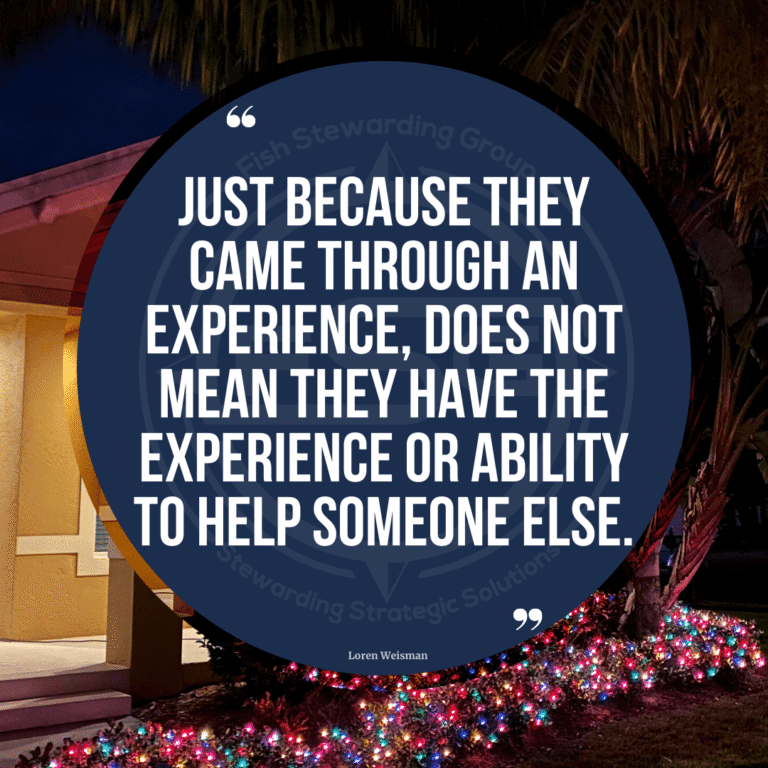
    Are they branding you into a box that is not you, Just because they came through an experience, brand communications quote

    Are they branding you into a box that you don’t fit into? Many of the branders, the people that begin to lay out everything from the logos to the content to the communication to the strategies, oftentimes they’re working off of templates and ideas.
    These aren’t necessarily bad templates, and they’re not bad ideas; they worked for others. But who did they work for? What was the budget? What was the audience? What was the product or service? Are they branding you for you or for someone else?

    You can run an array, a list of all these different things, where oftentimes it’s bypassed and the individual, the personalization of it, is gone. So they claim to have the answer, and it is the answer for someone, but it might not be the answer for you.

    Ensure when you’re doing your brand foundation, your communication, your optics, that you’re working with a team or someone that’s looking at you, not trying to fit you into a box but build the foundation around what you have.


    Are They Branding You Brand Comms and Ops Short Video

    [embedyt] https://www.youtube.com/watch?v=ECE-Bk9hZ0A[/embedyt]


    Are they branding you into a box that is not you? Looking Deeper.

    Looking deeper at this question of whether someone is branding you into a box that doesn’t fit, well, I’ve seen this pattern repeat itself countless times. The real tragedy isn’t just that cookie cutter approaches fail, it’s that they can actually damage your authentic voice in the process. When you’re squeezed into someone else’s successful formula, you may lose the very elements that make you distinct in your field.

    That expertise you’ve cultivated, those authentic perspectives you bring to conversations, the specific way you solve problems… all of that can get flattened into generic messaging that sounds like everyone else.Here’s what I’ve learned from working with clients who’ve been through this… Recovery takes longer than prevention.

    In may cases, once you have been branded into the wrong box, you’re not just building on a foundation, you have  to tear down what does not and is not serving you first.

    This is why I believe the initial conversation and questions around :are they branding you for you” with any branding professional should focus more on discovery than delivery.

    Consider asking potential collaborators about their process.

    Do they start with intensive listening and learning sessions?

    Are they curious about your failures as much as your successes?

    Do they want to understand not just what you do, but how you think about what you do?


    Are they branding you true to you? The right branding coach or strategist will challenge you to articulate things you might not have put into words before. They may be able to help you identify patterns in your work that you had not even noticed.

    But they should never tell you who you are… they should help you express who you already are more clearly.

    I feel your brand should feel like putting on clothes that fit perfectly, not squeezing into someone else’s uniform. When it’s right, it amplifies your natural authority rather than creating a performance you have to maintain.

    Are they branding you into a box that is not you, there is no better way to find out the true heart


    Loren Weisman is a Brand Communications and Optics Strategist who specializes in illuminating authoritative intelligence and amplifying authentic experts. * Weisman is also the host of the messaging and optics podcast; Wait What Really OK. * LW Website * © 2011 to 2026 Loren Weisman. All Rights Reserved ® ℗ * Are they branding you into a box that is not you, when marketing is not grounded, loren weisman, quoteAre they branding you into a box that is not you?


    Related reading

  • Strategic Patience Podcast Transcription

    Strategic Patience Podcast Transcription

    Strategic Patience Podcast Transcription for Strategic patience and pressure when preparing a launch Wait What Really OK PodcastStrategic patience and pressure when preparing a launch

    Strategic patience podcast transcription

    Strategic Patience Podcast TranscriptionReleased on November 1st, 2020

    🎙️ Tune In: Listen to this Wait What Really Ok Podcast Episode Strategic patience and pressure when preparing a launch  on Spotify Apple Podcasts Pandora Amazon Music Spreaker YouTube and other platforms.


    Strategic Patience Podcast Transcription Chapters


    Strategic Patience Podcast Transcription Chapters: 00:00 – Introduction to Strategic Patience and Pressure 03:56 – The Importance of Timing in Launches 05:30 – Strategic Patience vs. Pressure in Launch Preparation 06:45 – Mastering Mental Game for Launch Success 07:58 – Overcoming Perfectionism in High-Stakes Moments 09:11 – Navigating the Holiday Season for Launches 10:02 – Building Emotional Resilience Under Pressure 10:45 – Content Strategy and Brand Discovery Insights 11:30 – Incremental Improvement and Long-Term Growth 12:16 – Investor Perception and Strategic Planning 13:05 – Avoiding the Trap of Over ambition in Launches 13:45 – Resource Management and Sustainable Success 14:31 – Handling Launch Challenges with Integrity 15:18 – Lessons from Industry Leaders on Patience 16:00 – Adapting to Setbacks and Course Corrections 16:42 – Long-term Strategy and Decision Making 17:25 – Balancing Patience and Action for Results 18:19 – Authority, Authenticity, and Intelligence in Launches 19:10 – Strength Through Restraint and Focus 19:55 – Measuring Progress and Celebrating Milestones 20:35 – Conclusion and Final Thoughts on Launch Success

    Strategic Patience Podcast Transcription Text


    Strategic Patience Podcast Transcription


    Song: Wait, What? Really? Okay. With your host, Loren Weisman. This is a fully licensed theme song for the show about stuff that makes you say, wait, what? Really? Okay.

    Loren: This is Loren Weisman, and this is. Wait What Really Ok. A brand messaging podcast. I’m a brand messaging strategist and today’s topic is strategic patience and pressure when preparing a launch. This is around the idea of the organization after a brand discovery.

    As you begin to do your process architecture, laying out the blueprint and deciding on the plan of action and the time of action across this podcast. I’m going to run through this stuff real quick. I’m going to touch on the team, the time, the temperature, the tactics, and the taste before launching a business, a service, a show, a podcast, a product, whatever.

    In the middle of launching a business or in the middle of building a business and deciding how to launch, we have a lot of hearsay coming from a lot of different angles. We have a lot of truth. We also have a lot of expired truth or unrelatable truth.

    Now, it’s not that it is not true. It’s something can be objectively true that was shared with you about how a business was started or a product was launched, a podcast, a TV show, a movie. But if it’s an unrelatable truth because they took it down a path where there was certain finances in place, certain things going on around it, then it becomes a different story. And to follow that model is going to lead you down a path that will not work for you. Most likely, it bothers me.

    And this goes back to music and it goes back to a lot of other businesses where people explain not their story in humility and in the opinion of the things that they experienced that made it happen. But they shift it from the subjective to the objective and they state, this is how it works for everyone, and that is absolutely objectively incorrect and wrong. It worked for them that way. And that’s beautiful and that’s great, and it’s great to tell that story.

    But when that story is shifted to an objective reality and a directive to tell everyone to do it just like that, it’s irresponsible on the part of that person putting that information out or trying to sell that process to others because it doesn’t include all the other metrics, the time that went in, the budgets, the temperature of what was happening, even the taste.

    I know that sounds weird, but the taste and the flavor of everything in a circumference to allow certain projects, certain businesses and certain services to break through at certain times. I’m like so many other people.

    I love a success story. I love to hear about someone taking something, taking a dream, it being executed, it becoming successful. I don’t fault anyone for that. My problem is that when people take a model and don’t show with humility the metrics and the other elements that are going on, to me, that’s irresponsible. It’s not helpful. And then you’ve got these certain coaches, not all coaches, but they’re stating, well, this is exactly how you have to do that.


    Brand messaging blueprint strategies for creative careers.


    Strategic Patience Podcast Transcription Continued:

    And then they begin to showcase examples that can relate in no way whatsoever. There was a particular song that was about to come out on a particular year. I’m not going to dig too far into it. I was tied to it a bit in the release of that. It was held. It was held off. Something was about to come out. A whole bunch of big things happened.

    It was paused, it was repackaged, it was organized, Organized. There was some patience. And then it was launched at the right time, with the right team, at the right temperature, using moral connective tactics and pushing out just a little bit so it didn’t come off exploiting. And in that, it was incredibly successful.

    Now, had that song been launched a year before or a year after, it never would have gone anywhere. It wouldn’t have. And even the artist knows it himself. He’s, you know, he’s a humble and down to earth and going, it’s not the song. It was the way we were able to get the song into so many ears, and there’s no way at the standing budget that they had at the time that that could have worked.

    There are those magic moments, but a lot of what you may see as viral and out of nowhere, it may just begin to have motion, traction, a level of endurance. Then there’s a story behind it about how it gets picked up and how we want to maintain.

    And this is what I used to do in Los Angeles. You want to maintain a certain look, a feel, something organic, even when it no longer is organic. And it’s not that that’s necessarily bad, but it can lead people down to understanding and thinking, oh, I can just do this or I can just do that.

    So circling back around where I put the words in this title, patience and pressure. There are times to be patient when you want to fly forward. And there may be times inside of your story, your authority, the product that you have where it’s time to move and pressure through when you’d rather be patient.

    Many people will take a standpoint of I Just need to do it this way. It feels good to me in that it can end up feeling a lot more expensive. There was one reference a friend of mine said, you know, I feel like all I need to do right now at the moment is just press the pause button.

    Strategic Patience Podcast Transcription, loren weisman, wait what really okStrategic Patience Podcast Transcription Continued:

    And to him, and an immensely intelligent dude to him, what he saw in the motion, in the traction, was a simple pause and then unpause and everything moves again. But in the flow, in strategic motion, in the process blueprint, and at the same time, in timing and understanding releases, motion, traction, where money can be saved, where time can be exploited.

    When I say exploited, I mean the positive way, where releases can come and sit into dates and times, where the same release at one point and kind of circling back to this, the same release at one point with the same budget, put right in the right day, in between other items so that it can move slowly above the fold is going to have a much greater impact than doing it a month later, a month earlier. When you look at the strategies of not just going, okay, the product is done, the service is done, this thing is ready to launch, let’s just get it up, get it out.

    Yes, there are quotes out there and there are famous people that said, just be imperfect, just throw it out there. But right now, so many other people are doing the exact same thing. And yes, there are ways to begin and move things and motion and get things up.

    However, if you just throw it up there without looking at the time frames, without looking at the temperature, what’s resonating, competitive, comparative, even toxic, then you may end up putting something out and making an announcement. Because really, you only get that first chance to do that first launch.


    Fake Authors Using AI. Podcast Links and Transcription


    Strategic Patience Podcast Transcription Continued:

    After that, to potential investors, to potential earned media, press, pr, publicist, they’re seeing it as a second push and they’re immediately wondering what went wrong on the first. So almost a laundry list to look at.

    There can be a mixture from looking at a launch date, not just to say, okay, I need to get this out by this point, but more so if you’re going for that time frame, what’s going on around it, what are things that are relating vicariously, connected, indirectly connected and not connected at all to the industry, the service, or the product you’re about to launch.

    Is this the right time? I’ve mentioned to a lot of people as of late, you know, the first week of November really is not a time to launch most products. Yes, there are a few products and services that may have impact, but the next couple weeks, they might be a little volatile. News Cycles are not going to be pointing in the direction of new and fun things.

    And also depending on the product, it might be exactly the opposite time of where you could do something better. I’ve mentioned to a number of people saying depending on where they’re at, that moving toward February might be a better idea.


    Consulting Referral Agreement for Brand Communications Strategist


    Strategic Patience Podcast Transcription Continued: And this is not the rule for all. But here are a couple considerations. We have an election and this is being recorded two days before November 3rd and released then. So we’re going to have this election. We don’t know right now if there’s going to be a winner announced or if it’s going to be a couple of weeks. Then we’re going to go into the holiday season. In this holiday season, as we begin to track into Thanksgiving on top of it, we’ll have the toxicity of issues around government. We’ll be going into time around gifts and holidays and all of that.

    Then it’s going to come into a time who knows what’s going to happen in the streets. Then we get to an inauguration. Hopefully that’ll be on time right after that. Is it the Super Bowl? Are certain things potentially shut back down? Do things lean toward opening back up and then you’ve got the Grammys and then it starts to head into award season. Really right now it really depends on your product. But putting out anything prior to February 1st, right now as a full scale launch may be a little tricky.

    Most anything though it really, I mean there’s certain things that may tie into, you know, Covid for the holidays instead of home for the holidays or you know, there are certain things that can align. It’s not everything but a long term play for a lot of businesses right now maybe that are in a new stage, that are ready to launch, that have been built the right way. It may not be the right time to launch right now.

    Also, what makes up of December, what makes up of November in the ability to have time to really lay a foundation. There are a number of businesses right now that are not that are not launching, that are going back to the process architecture. They’re going back to the brand discovery. They’re really layering stuff out.

    They’re not attacking with content, but more so organizing and architecting and authoring content and preparing it so that there’s a truckload available. So as soon as somebody has the finger on the pulse of what’s going on from presidency to anything else, to Covid to all of this, that then there’s a great attack plan, there’s a great launch plan, there’s an endurance of that it doesn’t mean and I like to get away from this, I see some of these coaches you need to post X number of times a day.

    Strategic Patience Podcast Transcription, rant, loren weisman, podcastStrategic Patience Podcast Transcription Continued:

    If you’re posting crap over and over again, sharing other things, just putting out popular stuff, what are the chances right now that so many people are ignoring you?

    They’re unfall, okay, great, you’re connected with them on LinkedIn but they’re unfollowing you. I’m not following half of the people I’m connected to on LinkedIn because when they start following the I’m going to slam you with content to be seen.

    I’m tired of seeing the regurgitated, repurposed, you know, brand licensed content that everybody’s using the exact same way. So why should I look at it? So now in my unfollowing, to clear up my screen, I may miss their launch, I may miss something else that’s put in between there. This also is not a time to say, okay, we’re going to stand back and just blow up on content for exactly that reason. And I’m not the only one.

    Many people are disconnecting and when they give off the view that they are not being strategically patient and being perceived as acting in fear, this results and resonates with existing investors and even potentially investors down the line.

    Your scale, your blueprint, the way that you set up this marathon, from the launch to getting things out there to how you maintain it’s important inside of your scheduling to think about not just the people that are directly involved, not just even the investors that you have, but the investors and the opportunities that you may have in the future.

    Strategic Patience Podcast Transcription, lorenw eisman, daughter pictureStrategic Patience Podcast Transcription Continued:

    Because what many of them are going to do is they’re going to go backwards. If not them, someone that works with them is going to look at the tone, they’re going to look at the temperature, they’re going to get a feeling of a taste of what you’re doing and how you’re doing it.

    Many times people do not want to in these days, more often look at some existing prospectus. They want to have a look at how things have happened, the actions that people take in a state of fear, in a state of trouble, showcase how people can do in a state of love or in a state of success.

    Many businesses and many investors, many people that are getting behind projects are looking back seven, eight months. They’re looking at how people are acting because they know, wow, if these people can handle themselves and present and work and build and do it in the best way possible with what they have in the moment, in these troubled times, I feel, stating as an investor, more confident that in the best of times they’ll be able to be just as good.

    That’s the one thing I really take away from this whole experience is learning a lot of the other sides of people, how they act and how they interact in fear, in harder times, in struggle.

    And I’ve seen some beautiful people shine and I’ve seen some people where I’ve only seen them in great states, in great levels of success, in great levels of love. But when fear, when problems, when struggle hit, they went to the hills, they went insulting, they went to, they, they went to attack. They, they, they stepped away from their morals, they stepped away from their integrity to just try to survive. And yes, we all do need to try to survive regardless of your level inside a business.

    But you can survive through this with morals, with honor, with integrity. And even in that the structure, it’s not that old prospectus or business plan. A lot of people are not making a decision on 278 pages of here’s our five year projections. Because you know what, those were out the window a couple years ago and they’re even more out the window now.

    Strategic Patience Podcast Transcription Continued:

    They’re looking at what is happening, what is being built, how is it being built, where are you putting in the time, how are you creating this?

    Where are you saving money, where are you spending money, where are you taking the chances in that structure that can give a greater confidence and a greater essence of you, of your project, of what it is strategically, of not stepping back and saying, well, I read this book by this guy and he said to do this, but maybe only 2 out of 10 things anywhere relate to what you’re doing. Or I just want to take the time and let this thing simmer when it’s a great time to explode out and move and go. All that we do.

    When you’re looking on a larger scale project, on the, on an element of distribution, on an element of potential investment, all that we do and what we track is what others may be looking at to properly fund it or to properly support it down the line.

    It’s sometimes stepping into a place of humility and going, okay, if it was just me and me alone, not what I want to do right now, but I can look at the metrics, I can look at the tactics, I can see the strategies, I can see the discovery and I know that I’m going to have to do, yes, it’s uncomfortable, but I’m going to follow through.

    Because then in doing that the representation that you showcase for yourself, your project in the moment, and for next week, next month, next year, a couple quarters down the line, when somebody looks back and they do look back, like I said, and see this is how you acted at this point.


    How My Daughter Changed My Approach Podcast Transcription


    Strategic Patience Podcast Transcription Continued:

    Now, they know they can be with you at that point and beyond. The series of strategies comes across an array that oftentimes is a lot wider than the simple success book or the simple singular story. You hear people leaving out so many of the elements, and it guides people into the wrong directions and into the wrong hands.

    There is an element about trusting your gut, but also there’s an element of inside your gut, inside of your intelligence, of taking and simmering all the information, all the intelligence around you. That includes the metrics of the time, the temperature, the tone, the tactics, the taste.

    Looking at the competitive, looking at the comparative, and realizing whether it’s setting up certain work to be done to rush to a launch date correctly, or it’s being patient and humble and saying, okay, this is not the time, I need to step back.

    And I need to step back for a while because of all these same elements, then that’s the way to go there. And it makes for a strange time. I mean, I was joking with a friend last night. I was saying we’re hitting a time point where there are more people that can teach you how to be a leader that are not leaders and they’ve never been leaders.

    Then many of the leadership roles that are available or that are out there. It seems like it’s the same thing with the business success. And I’m not even trying to be sarcastic here. It appears more people that have never experienced success. And this is not toward all coaches. There are some moral, ethical, authentic and authoritative coaches.


    Brand messaging blueprint strategies for creative careers.


    Strategic Patience Podcast Transcription Continued:

    But it does feel like there are more business coaches or business success coaches out there that have never experienced success beyond completing a certification to call themselves a success coach than many of these entrepreneurs that are looking for success. There’s so much hearsay, half truths, expired truths, former hype across the board. And I only bring that up to circle back to this.

    Look at where it’s time to be patient. Look at where it’s time to put on a little bit of pressure. Have consider having a moment to look at everything outside of the scope of what you see it. And maybe it’s not hiring a coach, but maybe it’s hiring somebody for a moment to audit it and say, is this right? Or even the coach to vet the coach or the strategist that you’re working with. Double check that intelligence, yes, it’s good to get things out.

    Yes, sometimes you have to start a little uglier. But in times like right now, where some of the people that were able to start with so little, they may not be showcasing a path that can work for you.

    Strategic Patience podcast transcription, Loren Weisman

    Strategic Patience Podcast Transcription Continued:

    Now, on the other hand, maybe they are. But if you’re not taking the time to vet, to do your due diligence, to practice, to check this stuff out for yourself, it might run you into trouble. So inside of the strategic patience and pressure of your launch, know that sometimes you may have to be more patient than you want to be.

    And that’s going to be the best thing possible for your product, your service, your system or whatever. And there are other times you may have to feel a little bit more pressure.

    You might have to move a deadline up because you find a window that is absolutely the best that you can tell for the moment that it is. And who knows, maybe it falls apart.

    We’ve seen so many things that were strategically organized, but when we step in motion of authority, authenticity and intelligence, when we carry ourselves down a path as prepared as possible, then even as problems strike, even as things may change, we are prepared to redirect,  engage and reignite again, as opposed to just pushing gently or waiting until the perfect time, which sometimes is never in our humility, matched with our authority and our drive, with the most intelligence possible.


    Authentic messaging strategies for transitioning businesses


    Strategic Patience Podcast Transcription Continued:

    From there, the best decisions for you, not anyone else, can be made on the timing, on the team, on the temperature, on the tactics, and on the taste of what you’re creating so it can launch at the best time to save you the most money, to save you the most hassle, to amplify your message and your product or your service to the best and greatest audience possible. Then in there, you’ll know you’re on the right track.

    And even if something blocks that track, with everything you have behind you prepared, from the process architecture to the blueprint to everything that you’ve organized to prep for that, it will be that much easier, if need be, to prep for another time, as opposed to just dropping a whole bunch of stuff out, hoping for here, pushing too fast, waiting too long, so on and so forth.

    Yes, you want to get it out there. Yes, there are a lot of people that say, you know, wait till it’s perfect, to the complete opposite end of the spectrum of get it, get it all out now. But the answer for you, the individual answer for you, the best answer for you, is to get all the intelligence together so that you yourself, based off of the intelligence, the metrics and that information can make the decision that will be best for you, best for current investors, best for future investors, best for the story as a whole.

    So that in that launch, regardless of how big or how small it goes, it can have a rippling and resonating impact into the future to continue to connect you with the right clients, the right customers, the right investors, the right media, and so on and so forth. Take that time to organize that time in a way that works for your story, your authority, your messaging and your product, and not creating a system or a launch pad for someone else. Wait, What? Really? Ok. Ok.


    Strategic Patience Podcast Transcription for Strategic patience and pressure when preparing a launch Wait What Really OK Podcast

    Strategic Patience Podcast Transcription

    * Loren Weisman is a Brand Communications and Optics Strategist who specializes in illuminating authoritative intelligence and amplifying authentic experts. * Weisman is also the host of the Brand Communications and optics podcast; Wait What Really OK. * LW Website * © 2011 to 2026 Loren Weisman. All Rights Reserved ® ℗ * Strategic Patience Podcast Transcription for Strategic patience and pressure when preparing a launch Wait What Really OK Podcast

    Related reading

  • Shop Local Shaming Transcription

    Shop Local Shaming Transcription

    Shop Local Shaming Transcription for Shop local shaming and small business messaging missteps Wait What Really OK Podcastshop local shaming transcription, wait what really ok

    Shop Local Shaming Transcription

    shop local shaming, wait what really ok, loren weisman

    Released on November 27th, 2020

    🎙️ Tune In: Listen to this Wait What Really Ok Podcast Episode Shop local shaming and small business messaging missteps on Spotify Apple Podcasts Pandora Amazon Music Spreaker YouTube and other platforms.


    Shop Local Shaming Transcription Chapters


    Shop Local Shaming Transcription Chapters: 00:00 – Introduction to Small Business Messaging 01:39 – Problems with Shop Local Shaming Tactics 02:45 – Why Guilt-Based Marketing Fails 03:18 – Encouraging Positive Community Engagement 04:32 – Real-Life Examples of Local Business Messaging 06:13 – Importance of Authenticity in Branding 07:28 – Customer Loyalty and Honest Communication 08:41 – Overcoming Negative Perceptions in Marketing 10:05 – Moving Away from Fear-Based Messaging 11:17 – Creative Strategies for Small Business Growth 13:03 – Building Better Community Connections 15:13 – Conclusion and Final Thoughts

    Shop Local Shaming Transcription Text


    Shop Local Shaming Transcription


    Song: Wait, What? Really? Okay. With your host, Loren Weisman. This is a fully licensed theme song for the show about stuff that makes you say, Wait What Really OK

    Loren:  Houston, we have a problem and that problem is audio. My name is Loren Weisman. This is the brand messaging podcast. Wait, What? Really? Ok. And I’m coming to you today on my headphones because of errors and problems and issues with my microphone and the other computer. So I apologize for the quality of the audio. I hope the quality of what’s being shared is something you can resonate with.

    This episode is called the Shop Local Shaming and Small Business Messaging Missteps. If you’ve noticed at all, there is a tone, and this is in a lot of different places all across the country and even online, on television and even in a shop window, there’s an aspect about, and I have no problem with it, Shop Local. I personally, from an authentic messaging standpoint, would rather see it delivered a little bit more of consider shopping local. And here’s what this is, and here’s what that is, and here’s what we have.

    The problem I see is the shaming that goes on, the insulting, the aggressiveness, the passiveness aggressiveness, and then the insulting and the assumptions that go along with the Shop Local trend. Now, there are some, I’m not saying this is all. There are some very moral, honorable local business owners, local shops that are out there and they are inviting in honor, they’re inviting in love, not using fear tactics or pressure tactics or toxic tactics for that matter. So again, this is not pointed at them, but there are a lot of people out there that are taking an approach that is irresponsible, unprofessional, dishonorable and just all out rude.

    Where does anyone, and we saw this in a couple places here in Orlando. Where does anyone have the right to say, if you don’t shop here, you don’t care about your community? When I saw that in a particular sign and a particular message that came out online. I do care about my community and I do care about messaging, motioning, connecting in love and honor. And I will never shop there again if it comes to an insult to try to draw an audience, to get conversion. How is that going to work? And especially in these days, we’ve seen this tone before.


    Fake Authors Using AI. Podcast Links and Transcription


    Shop Local Shaming Transcription Continued:

    How could you possibly go to Walmart? Oh, you’re just going to go to one of those big box stores and grab one of those things when you could get one of these and it’s locally made and this feeds into the economy. Now again, I am all about local businesses. I am all about small businesses. But when they are communicating and they’re messaging, and if they want to do it with authenticity and authority, invite me instead of ordering me, and instead of shaming me, explain what you have. Shop local.

    You know what? Take it up a notch.

    Take it up a notch of respect and honor in a time that’s challenging, in a time where a lot of people have lost money. Explain the difference beyond just a statement. And really with a lot of these local businesses that are in tight shape, I completely understand that. But where is it fair for the other people that may not have a local business?

    Maybe they work for a big box store, maybe they work for a corporation, maybe they work for Disney or somewhere where they have lost their income. And right now, the concept is, I’ve got three kids. I want to get this many presents for each of them. If I go here, if I order online on Amazon, I’ll be able to do this. Yes, I want to be a part of my economy, I want to be a part of my community, but also right now, I want to take care of my family. How can those people be faulted?

    And the fact that people have attacked on Twitter, on Instagram, on Facebook, saying, well, oh, there was one that was great earlier this week and it inspired doing this, this podcast now was something, you know, you could get a couple less items for your kids and you could get them locally and how much would that make this business feel good?

    I’m sorry, as a father, father of one, my focus in the things that are needed come to my family in the time that I’ve lost, not being on the road, not speaking, certain things being held up. Yes, I still do want to support my community, but my first responsibility is to my wife, my daughter, my family and the well being there. And as this has all happened, it is looking at a budget and going, okay, where do we trim? Where do we slice things down a little bit? What can we do? And you know what? I get that the local gas station, that might do a little bit more for this particular person, but I have a Walmart gas station that’s about five minutes away.

    And I have a Walmart card which adds an extra discount there. And I’m sorry that right now. No, let me pull back on that. I’m not sorry right now at this time. When it comes to gasoline, when it comes to putting fuel in these two cars that we have, that’s one area where I’m going to save as best I can.

    It comes to the same thing in Other areas, it comes to the same thing. In presence, it comes to the same thing, okay, you know you’re shamed to go to Starbucks. There are many people support this community. Come here and have this coffee at this coffee shop. You should be supporting local coffee. Coffee, tell me what you have. Tell me about your flavors.

    What if just as a subjective opinion, what if that local coffee shop just sucks and they’re to you not saying it’s to everyone it’s subjective. But what if it sucks to you and you don’t like their coffee and maybe you prefer Starbucks, maybe you prefer Dunkin Donuts, maybe you have a personal preference where it tastes that much better to you.

    And in that experience, how are you not being a part of your community by saying, okay, well I’m going to go get coffee here in the mindset of this larger scale of your budget, for us to all truly love our community, according to many individuals out there, we have to probably be spending tenfold of what we’re spending right now and make it all completely localized. And again, on the other side of it, and we’ll flip the switch.

    shop local shaming transcription, if you can vote many times for a contest or award, loren weisman quote, brand communications and opticsWe’re at seven minutes. Let’s go positive here.

    On the other side of it, if the product just isn’t that good or if you don’t know that much about it, people, you’ve got to come in here and see my place. Let’s move away from that. Invite them on social media, not just to put out these shop Local and it’s shop Local days and support your community.

    Because in a way, a lot of these families need that support right now. And to be shamed and guilted for buying their presence on Amazon, getting their gas or food at Walmart and making certain decisions that they have to make right now and to be shamed for that because they’re not helping a particular business that also may be in trouble or may not be doing as well. That’s not fair. So let’s now we hit that mark.

    Let’s now mark it over to a softer level of messaging that can be a little bit more engaging. I believe some of the problems where this kind of messaging shows up and this guilting and this shift shame and this aggressiveness or passive aggressiveness can be solved in inviting the flip side of not saying shop local. Because even if you’re that individual that is not using shame tactics right now just to put out shop local and come from the intention of, well, I’m not saying that that’s not going to complete and put together what you want to see or get the perception of.

    From an audience because they’re experiencing it from other people. Shop local is trending emotionally as a bad word to many because of that guilt that they’ve seen in other places. Oh, well, that’s not me. It doesn’t matter. So to flip that over, to understand, to get out the intention of your heart, to get that through to the perception of Most begin to talk about and begin to invite or at least consider it what you do, how you’re doing it differently. How could there be a variation? Okay, you know, I know some toy stores out on the west coast and they flip their messaging. We talked about this a couple years ago.

    Shop Local Shaming Transcription Continued:

    They flipped it from, you know, don’t go to Amazon and don’t go here and come here. It wasn’t working well for them when they began to flip their messaging to say, you may want to get. If you buy this here and this breaks or you have a problem, you can bring it back to us and we can look at it. We may be able to help you. We may be able to get this thing repaired. They had this teddy bear repair system and it was basically, they were tied to a person in a strip mall that this toy shop was attached to that where that did sewing and seamstress stuff. So part of their upsell, which was much more engaging than a guilt push, was if that dog gets to the bear, okay, if you got to do it on Amazon, that’s fine, but if that dog gets to that bear, if, you know, kid bites it, if whatnot, within this amount of time, we’ll patch them up for free. So now you’ve just brought a different offer to the table.

    You brought a different light to the table. You brought something that has, I don’t want to call it a warranty, but an extension to it. In addition to it, many of these shops also to begin to tell the vicarious story of this is how I opened, this is what I did. This is how it’s been a little scary. These are the things that we’ve been doing in Covid. These are the things that we do.

    Not to beat out Amazon or Walmart or Target, but how we work to differentiate. It’s not going negative. It’s not saying you’re not going to get this kind of customer service and they’ll never get back to you, but we will. It’s explaining your customer service. It’s inviting people to your story. In small businesses, the messaging oftentimes it heads. When it’s in a fear place, it heads toward shame.

    It heads Toward attacking.

    Let’s not attack Target,

    Let’s not attack Walmart.

    If you’re a small business right now that regardless of your feelings of their operations or whatnot, you may have a great deal of an audience that will associate your attack with more of that shame, with aspects of the perception that may not tie to your intention. But overall, it’s still sitting in a place of fear and it’s still sitting in a place of anger. So in the ways that you can begin to or further tell the story of how you came about things that you might carry that nobody else does, what is something about you?

    You know, there’s a new bookstore here and all we’re seeing for certain media is and this was a proven concept over here. So come here. And this was. Tell me about the store. I walked in there for myself with my daughter and I found this cool little, you know, children’s area. Just a different type of vibe, a different thing with what was going on with the books. It was inviting. And I don’t see that anywhere online. I just see this is new and support local business. It’s a beautiful bookstore. It’s the same thing with many of these restaurants. It’s not shaming somebody for going to Chili’s, but. And not necessarily crossing.

    Do you really love the Chili’s avocado cheeseburger? I do. I think its great.

    And I had a guy in a place that was in Winter Park about a year back and he said, and it was just a beautiful, humble approach. Have you ever had that thing over at Chili’s? It wasn’t a judgment for going to Chili’s. Well, we do a little bit different with the avocado sauce and we use this little pico with the avocado and we add this, this and this.

    You might like it. It wasn’t. You’ll love it. It’s better. You’ve got to have. You shouldn’t go to Chili’s. It was an engagement. It was a beautiful form of authentic engagement to draw something that I liked from a larger scale chain restaurant to invite me to try a local burger place and try what they were doing and giving me an idea about it. And yeah, I went and yeah, I spent the money and the next time I’m out in Winter Park, I’ll probably go there again.

    That’s the story. That’s the flip. That’s where we lose. We move from the shaming and the aggressive and the fear to a place of love and engagement. And it will do worlds better for your business if we Invite people by explaining about you, about the store, about the employees. Are you looking into a certain product here? Try to come on Tuesdays or Wednesdays when so and so is here. He or she just really knows their stuff. And even in the knowing, knowing the stuff, you buy plenty of things on Amazon.

    You buy things that element, not necessarily somebody sewing up a teddy bear, but that local hardware store, that one place where there’s stuff that you can find out or connect with people, not necessarily just YouTube it online. And again, not knocking that, but you could say something.

    I know you could run into a problem with something like this if you ordered it and you might find five YouTube videos and they might be a little bit vague if you do purchase it from here, here’s how we can help. Now take that up a notch. Add to those YouTube videos. If you are a service provider, if you are a knowledge, an expert, have experience in some of these things, add to that flavor, add to that voice.

    Embellish with your authority and an aspect of vicarious, vicarious connection, understanding about the products and the services. You have now clear out the whole shaming and you’ve opened up the door for people to feel that much and more engaged, to feel you coming at them in love, for them to take a chance and maybe walk through those doors, because a lot of them are not coming through those doors because they don’t want to be shamed and maybe they even want to have a look, but maybe they feel just that much more overwhelmed.

    Shop Local Shaming Transcription, Using brand licensed content is not stealing but it is plagiarism, loren weisman quote, branding quotesShop Local Shaming Transcription Continued:

    Lastly, consider going the opposite direction of shame. Consider not just saying, well, you got a lot, you got to shop local after you leave here, you got to go here and then you got to go here, you got to spend a whole bunch of money that maybe they don’t have.

    Maybe it then becomes something of an ask and an invite, an understanding, a humility. So not only, you know, not going in a derogatory or a negative or a fear way about somebody going to Walmart or going to a big box store or choosing to buy something that’s a little bit more affordable because it’s the right time, but really to be sympathetic, empathetic and engaging.

    I know you may want to go do this, you know, maybe it’s the local Christmas tree seller and it’s that element of, yeah, you want to get your tree here, you know, these are a little bit up. Maybe you’re going to want to do this tree. And if you’re a little worried about our stands, if they don’t come with it in certain places, I heard Walmart is doing this, invite the connection of it. There is a way to support a community.

    Not a lot of people talk about that.

    There is a way to support a community while at the same time allowing that community to go and save money in different places, the different ways that you can offer up things. Okay, you might want to get this from us here. And you know what, on Amazon you might do better.

    So perhaps you buy these things with us and maybe these other items, you’ll save a few bucks and you go over here. Yes, that might sound counterintuitive to the yell tell sell and the always pressuring and always pushing and always upselling. But right now it’s a different time. And if somebody said that to me, I really would be looking a little bit deeper into that business and how I could support that business.

    Because when I’m hearing words and I’m seeing that a business is not attacking me or that when I look at something and I think, you know, I might be able to get X, Y or Z part of this online. Oh, well, you have to get it here. Well, you know, you got to support local business.

    Wow. We can do the local business, we can support it. We can still love our community even if we’re shopping, you know, Walmart, Publix, wherever else. It’s a harsh thing to read some of those statements of you’re not. I was on some site earlier and it was amazing. It was this list of you don’t love your community if you don’t do this. You have to do it. This is what it does locally. A lot of it. Some of the statements were true.

    There was a lot that was subjective, a lot that was assumptive and a lot that was incredibly insulting. You can love your community in a lot of other ways. You can even share about certain businesses because you might not even be able to go there and you could recommend them. But in this tone, in this timbre, in this tempo. Right now let’s move away from the shaming.

    shop local shaming, Invite by explaining about you and your store, loren weisman quote, brand communicationsShop Local Shaming Transcription Continued:

    Let’s allow for a standpoint. I mean, if it was the same thing for you, let’s say, and maybe for some of these shop people it is, and these store people it is. Are you really going? Would you. What if the shoe is on the other foot? Or maybe it is and you have to go certain elements and you have to go a little bit cheaper here and you have to go a little cheaper there.

    Yes. You can’t possibly, and some people can’t possibly have that be understood for their business. And yet they’re asking it for others. So the close in this thing, the concept is the messaging missteps as a whole is an arrogance and a lack of humility, a lack of empathy and a lack of understanding.

    It’s also a missed point that the intention of, well, I’m just saying shop local because I want people to support the community and that would be really nice. The perception of that by many is being read as insulting because many people are insulting, many people are shaming. I’m not saying don’t necessarily have the shop local sign out there, but add to it, add under it, explain what you have, what you’re doing, allow for the tagline, the ask the call to action to include a reason why.

    And not just shop local. Give them a reason why they should shop local with you beyond all the reasons that they’ve heard that go from the aggressive to the passive aggressive to you don’t love your community, explain about the products, explain about the additional services, explain about the care, explain about the staff, engage people to make that decision.

    And even if they don’t continue in that more positive mode to eventually, as people have a little bit more money, have a little bit more time or continually see you, maybe they’ll circle around again. Because the insulting, the attacking, the shaming, the acting in fear and arrogance and anger is not working. And not only is it not working for you, but as you, if you’re putting that out there, it’s hurting other local businesses too. So consider taking that step back, standing in love, not fear.

    Sharing authenticity and the story and the invitation and the store and the employees and a little bit more about the products and a little bit more about how they may get a better service from you for getting it through you. And then in that, continue that kind of endurance, engagement with authenticity and authority.

    No negativity, no bashing the stores, but in a sense, and in the end, moving away from the, you know, shop local and giving them a reason why they should consider shopping local and why they should consider shopping with you. And in that consideration, in that invitation instead of an order, you may find the orders moving up more and more and more. Wait What Really Ok.

    Shop Local Shaming TranscriptionShop Local Shaming Transcription


    * Loren Weisman is a Brand Communications and Optics Strategist who specializes in illuminating authoritative intelligence and amplifying authentic experts. * Weisman is also the host of the Brand Communications and optics podcast; Wait What Really OK. * LW Website * © 2011 to 2026 Loren Weisman. All Rights Reserved ® ℗ * Shop Local Shaming Transcription

    Related reading