Tag: Brand communications and optics speaker

Brand Communications and Optics Speaker is an archives tag for Brand Communications and Optics Strategist Loren Weisman website.

  • Do Not Vote Transcription

    Do Not Vote Transcription from the Podcast Do not vote if you do not want to vote. Voting is a right.

    Released on October 14th, 2020


    🎙️ Tune In: Listen to this Wait What Really Ok Podcast Episode Do not vote if you do not want to vote. Voting is a right. on Spotify Apple Podcasts Pandora Amazon Music Spreaker YouTube and other platforms.


    Do Not Vote Transcription Chapters


    Do Not Vote Transcription Chapters 00:00 Introduction and Video Overview 01:11 Defining Voting Rights and Responsibilities 02:05 Why Voting Matters in Democracy 03:01 Toxicity in Voting Campaign Messaging 03:52 Impact of Guilt and Shame Tactics 04:31 Ineffective Voter Engagement Approaches 05:13 Authentic vs. Performative Activism 05:56 Encouraging Informed Voter Participation 06:30 The Value of Individual Voting Choices 07:01 Personal Reflections on Voting Experiences 07:49 The Silent Majority and Voter Silence 08:36 Understanding Non-Voters’ Perspectives 09:03 Social Pressure: “Are You Voting?” o9:54 Respectful Dialogue About Voting Decisions 10:40 Building Empathy in Political Conversations 12:13 Moving Beyond Forceful Voting Messaging 14:20 Final Thoughts on Voter Autonomy and Messaging Do Not Vote Transcription Text


    Song: Wait What Really OK with your host, Loren Weisman. This is a fully licensed theme song for the show about stuff that makes you say, Wait, What Really Okay. Hi, this is Loren Weisman. This is the brand messaging podcast. Wait What Really OK.

    The title of this podcast was not something I tried to get you to click through. This is not clickbait. The name of this podcast is do not vote. If you do not want to vote and voting is a right, this is going to be a brief message. And I invite you, if you’ve listened this far, before making judgments, before preparing a counterattack, or before getting angry, to just have a listen to a view. It may not be your view. It isn’t right, it isn’t wrong. It’s a view, it’s an opinion. I’m not trying to hurt anybody. I’m not trying to make this a Conservative or a Democrat or a Libertarian or an independent style podcast.

    It’s just a thought. And again, referencing. Because this is a brand messaging podcast, the messaging that we have going on out there, and not just with the election that’s coming up. Because when this podcast comes up, we’re gonna be about 20 days out from the 2020 election, but something that’s shown up in a number of presidential elections and a number of midterm elections and elections as a whole. Now that I feel like I got the legal part out, I want to share my view. The word rights. Rights are defined or a definition that I have here. Rights are legal, social or ethical principles of freedom or entitlement. That is, rights are the fundamental normative rules about what is allowed of people or owed to people according to some legal system, social convention or ethical theory.

    Now, in that we as Americans have a right to vote, that is our right. It is not our responsibility. That’s where I see that a lot of issues have had that have happened over many years in people being excited, in people saying, you’ve got to vote, it’s your responsibility. I woke up this morning, one of the first things I saw was it is absolutely unacceptable if you don’t vote. Another post a few hours later. If you’re not voting, I don’t want to know you. Where is this inviting people? Where is this engaging people? There’s a toxicity and it’s gone on for a number of elections. There are a lot of people that don’t vote. They choose not to. They have a right to, but it doesn’t mean that they are responsible to.

    It is not a law. It is not a. You have to come in and make this decision. Now from where I stand, I would love everyone to vote. I would love everyone to register to vote in time and, and early so that the issues that come up with these late minute registrations which they bother me, it’s people getting out there saying this isn’t right when they’ve had months on end. But that’s another story. That’s another thing. And yes, there are plenty of problems in our system, but still one of the biggest problems I see is in the messaging inside of that system that is pushing a force that is attacking people, calling people out, shaming people because they choose not to vote, they choose not to be involved. Now flip it around.

    Do Not Vote Transcription Continued:

    Yes, what I mentioned before, I would love it if people were involved. I would love it if they looked up their candidates, if they looked up from the most local elections to the presidential, if they looked up and vetted the material, not just reading the headlines, not just reading, you know, the above the fold, but going in and making an educated decision, educated ability to speak today in that I would like that. But that’s my opinion. It’s not my place to tell someone, you need to know more about Biden and Trump and the Senate and the House and all of these issues. That is not a way that is going to draw someone in.

    At the same time, the same people that in some ways are shaming people into voting are the same ones that are being shamed in other areas of their lives, in other areas where they just don’t want to deal with something or they don’t want to be involved with something and it’s their right not to. And yet it’s almost hypocritical that they go on this. It’s also interesting that many people that push such an aggressive, overly dominant voting message, it’s just almost not even like, I want you to vote, I want you to be involved, I want you to know this stuff. But more so I want you to know my candidate, if somebody does not want to get up and get out to register and I’m not talking about the people that are unable to, I know that there are people out there that need help with that.

    But if someone hasn’t voted in 20 years, in 30 years, if they don’t like the system and they don’t feel that it is something they want to do, or maybe they feel like it’s so broken their vote doesn’t matter. And yes, votes count. But if somebody doesn’t believe that, where are you to guilt them, shame them, attack them and pressure them? And in that where does that draw them to want to be involved? Our messaging, from just this toxic attack to this format to. I mean, I remember some stuff when I was younger, they had shirts out there, vote or die. And when you look at the numbers of a number of major elections, it is a lesser percentage.

    There are a lot of people out there that can vote, that choose not to. And at the same time, just as it is their right to vote, it is their same right to. To not vote and to not vote because it is a right that is given to them. Why should they be attacked for it? Why should they be insulted for it? I would like to see the motion move out of fear and more toward a place of love and in that love to be able to have a conversation.

    Why haven’t you voted? I’m not attacking. I’m curious. I want to know where you stand. And here’s why I think your vote matters. And here’s why I would love you to be involved in the system. Can I share some stuff with you? Can I show you some stuff from the candidate I’m voting for or the bill that I’m hoping will get passed, or the things that I want to see stay the same, or the things that I want to see change, the things I want to see removed, added, and so on and so forth? Isn’t that a tone that invites a conversation and an option? Wouldn’t that get so many more people to say, you know what? I haven’t. Maybe I’ll take a chance or maybe I’ll try this. I see more stuff on Facebook and Twitter.

    How hard is it to register to vote, you idiots? So if you’re not registered to vote and you come across that, where is that a drawing, inviting, engaging and loving factor to have them open the door? If anything, it’s the exact opposite. To close that door, to put a wall up, to stay back and even to lie in these lies. We don’t know who’s registered. We don’t know who’s not registered. Really. A lot of these polls, especially this year and even in the last major election, it’s anybody’s game because. Not because these polls are off and. Well, the polls are off, but people aren’t necessarily answering the questions the way they think to.

    We’re just going to keep rolling here. They’re not necessarily answering the questions or they’re answering the questions and saying what they think will keep things peaceful. There’s a silent majority. There are people that. There’s a silent majority from everything, from the people that want to Be that want to vote or voting Democrats in more Republican based areas.

    There’s a silent majority of Republicans that are in Democratic areas. There’s a silent majority of people that are being attacked right now. And in researching for this particular podcast and this thought, I was able to speak to some people that are right in my neighborhood. And again I came at them in love, not fear, not attack, not signing them up to vote, but just asking, do you vote? Have you voted? Are you voting?

    And the immediate reaction is back and it’s saying, and then when I explain this is what I’m sharing and this is the title of the podcast that I’m going to be putting out on Thursday, there was a calmness. They didn’t want to give their name, three people in particular, but they all said that they weren’t and they were afraid to share that. And so then I asked them why not and they shared their views. And even though I disagreed with them, even though I couldn’t understand some of their points, it was not my place to tell them to vote. It was not my place to tell them to register to vote. It was not my place to do anything.

    Do Not Vote Transcription Continued:

    Because if I’m telling them or forcing them, I’m taking away their rights because and getting right to the point here, they have just as much of a right to vote, to register, to vote, to go to a polling place and vote as they have the exact same right in this country not to vote, not to register, not to go to a polling place. I believe that when we look at how we’re responding to people and not telling someone, it’s your responsibility to vote.

    But we look at the messaging, we look at where it’s coming from, whether it’s this fear based thing and there’s a lot of fear in that messaging. I don’t want my candidate to lose. This candidate can’t win. This can’t happen. You need to go register to vote with the underlying tones of vote for my person. Where does that change? Where does that help us connect and understand and communicate and make things better? Maybe in shifting and we can’t shift the mainstream media and you can’t shift many of these angry, highly funded, toxic campaigns that are taking out this shaming narrative.

    And it’s, and again, it’s not new. Yes, we’re seeing it more because of social media, but this narrative has been around since I was, since I can remember these campaigns. I remember them back to being in elementary school. I’m 46 years old. I remember hearing the attacks and it was, and I’m from Massachusetts. I remember when Dukakis was running, I didn’t know all the issues. I didn’t know all the things going on, but I had a sense and how he was attacked. And the same people that would jump and just go brutal on him were the ones turning around and just going brutal on people that hadn’t registered to vote or hadn’t voted.

    People coming out, finding out here, okay, here are voting numbers. Here are the numbers that came in for western Massachusetts or where I was from. And it was Channel 22, I believe, was what it was in western Massachusetts. And this editorial came out of this person that was just saying, shame on this number of people to live here and not doing that. So you’re saying again, shaming these people to try to draw more people to vote. So the close here, and this is a short podcast, I’m done. I’m going to wrap it up here. Keep it short, keep it simple. We don’t need to shame. And this isn’t going to change on the massive narrative, but with a couple individuals to sit there and ask someone to consider to vote and that it is their right.

    And here’s why you think it’s a good idea for them to vote. And in that, even if the response is no or I don’t know, or we’ll see in your honor, in your integrity, in your authenticity and your humility to sit back and say, well, thank you at least for listening, thank you for hearing my side, maybe that opens up something where it doesn’t necessarily get them. And maybe they haven’t registered so they can’t vote in what is about, you know, two, three weeks out right now for us for this election. But maybe they register for the next one.

    Do Not Vote Transcription Continued:

    Or maybe it plants a seed in a better soil that isn’t poisoned and toxified, that makes them feel for themselves that they want to practice this right that is theirs and not yours. Let’s step away from the force. Let’s step away from the shaming in changing the government. And yes, voting can change, but some people don’t believe it. And if all you’re doing is screaming at them, all they’re doing is putting their hands over their ears and running away in inviting and engaging. And this ties to all business. This ties to just the connections to entrepreneurs, to anybody, to any business, service, product.

    Let’s stop telling people what they need to do, what they must do, that if you don’t realize this, you’re blind. Or shame on you for not using this or voting for this person or doing that and flipping it around and honoring the individual, even if you can’t connect with their decision or their views, honor the individual. And then maybe in that honor, in that connection, in that engagement, they’ll take a second look. And maybe it won’t be this election or the next, but maybe the one after that will open them up to an option that they hadn’t thought of. So I invite you right now if you. And I know it sounds crazy, and I know it sounds a little bit off, but do not vote if you don’t want to vote.

    It’s your choice. You have a right to vote, just as you have a right not to vote. And when it comes to other people and you want to campaign and you want your particular person or you want people at the polls, consider inviting through engagement, show sharing, an interaction, and move away from shame, insults, guilting, and attacks. And maybe what is move to a better place doesn’t happen in the election cycle or a particular election or, you know, a particular vote, but maybe over time, that sets the seeds and that sets the motion to make that change, to make things better, to get more people connected and then making as a whole and as a larger community, better decisions for the community with more people involved.

    This is Loren Weisman. This is the brand messaging podcast. Wait, what? Really? Okay. Have a good day. Wait, what? Really? Okay.


    Do Not Vote Transcription
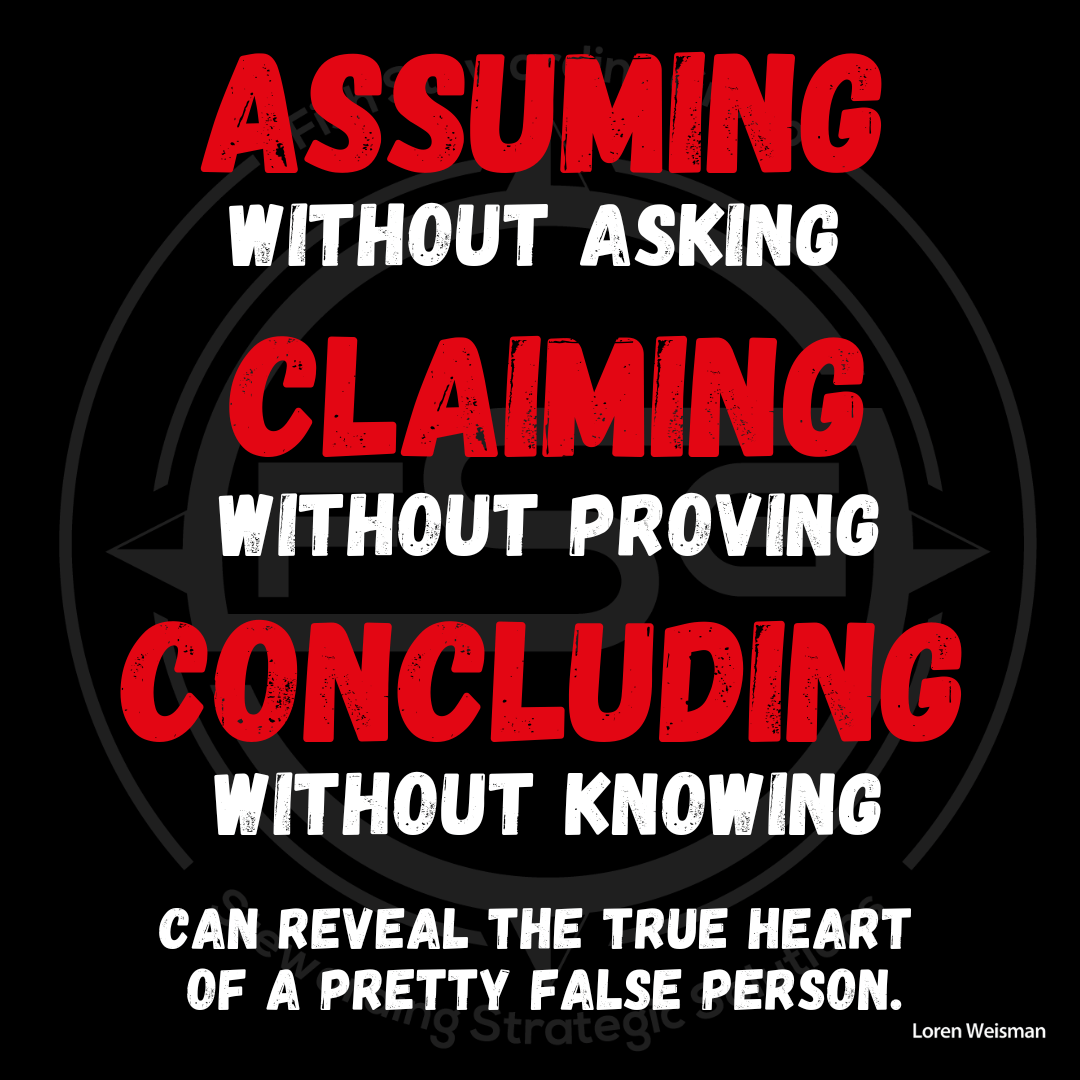
    Text card on black reading: Assuming without asking, claiming without proving, concluding without knowing can reveal the true heart of a pretty false person.

    Assuming without asking, claiming without proving, and concluding without knowing, can reveal the true heart of a pretty false person.


    Loren Weisman is a Brand Communications and Optics Strategist who specializes in illuminating authoritative intelligence and amplifying authentic experts.

    Weisman is the host of the brand communications and optics podcast Wait What Really OK.

    Do Not Vote Transcription from the Podcast Do not vote if you do not want to vote. Voting is a right.
    Related reading

  • Strategic Patience Podcast Transcription

    Strategic Patience Podcast Transcription for Strategic patience and pressure when preparing a launch Wait What Really OK Podcast

    Strategic Patience Podcast TranscriptionReleased on November 1st, 2020

    🎙️ Tune In: Listen to this Wait What Really Ok Podcast Episode Strategic patience and pressure when preparing a launch  on Spotify Apple Podcasts Pandora Amazon Music Spreaker YouTube and other platforms.


    Strategic Patience Podcast Transcription Chapters


    Strategic Patience Podcast Transcription Chapters: 00:00 Introduction to Strategic Patience and Pressure 03:56 The Importance of Timing in Launches 05:30 Strategic Patience vs. Pressure in Launch Preparation 06:45 Mastering Mental Game for Launch Success 07:58 Overcoming Perfectionism in High-Stakes Moments 09:11 The Holiday Season and Launch Timing 10:02 Building Emotional Resilience Under Pressure 10:45 Content Strategy and Brand Discovery Insights 11:30 Incremental Improvement and Long-Term Growth 12:16 Investor Perception and Strategic Planning 13:05 Avoiding the Trap of Over ambition in Launches 13:45 Resource Management and Sustainable Success 14:31 Handling Launch Challenges with Integrity 15:18 Lessons from Industry Leaders on Patience 16:00 Adapting to Setbacks and Course Corrections 16:42 Long-term Strategy and Decision Making 17:25 Balancing Patience and Action for Results 18:19 Authority, Authenticity, and Intelligence in Launches 19:10 Strength Through Restraint and Focus 19:55 Measuring Progress and Celebrating Milestones 20:35 Conclusion and Final Thoughts on Launch Success

    Strategic Patience Podcast Transcription Text


    Song: Wait, What? Really? Okay. With your host, Loren Weisman. This is a fully licensed theme song for the show about stuff that makes you say, wait, what? Really? Okay.

    Loren: This is Loren Weisman, and this is. Wait What Really Ok. A brand messaging podcast. I’m a brand communications and optics strategist and today’s topic is strategic patience and pressure when preparing a launch. This is around the idea of the organization after a brand discovery.

    As you begin to do your process architecture, laying out the blueprint and deciding on the plan of action and the time of action across this podcast. I’m going to run through this stuff real quick. I’m going to touch on the team, the time, the temperature, the tactics, and the taste before launching a business, a service, a show, a podcast, a product, whatever.

    In the middle of launching a business or in the middle of building a business and deciding how to launch, we have a lot of hearsay coming from a lot of different angles. We have a lot of truth. We also have a lot of expired truth or unrelatable truth.

    Now, it’s not that it is not true. It’s something can be objectively true that was shared with you about how a business was started or a product was launched, a podcast, a TV show, a movie. But if it’s an unrelatable truth because they took it down a path where there was certain finances in place, certain things going on around it, then it becomes a different story. And to follow that model is going to lead you down a path that will not work for you. Most likely, it bothers me.

    And this goes back to music and it goes back to a lot of other businesses where people explain not their story in humility and in the opinion of the things that they experienced that made it happen. But they shift it from the subjective to the objective and they state, this is how it works for everyone, and that is absolutely objectively incorrect and wrong. It worked for them that way. And that’s beautiful and that’s great, and it’s great to tell that story.

    But when that story is shifted to an objective reality and a directive to tell everyone to do it just like that, it’s irresponsible on the part of that person putting that information out or trying to sell that process to others because it doesn’t include all the other metrics, the time that went in, the budgets, the temperature of what was happening, even the taste.

    I know that sounds weird, but the taste and the flavor of everything in a circumference to allow certain projects, certain businesses and certain services to break through at certain times. I’m like so many other people.

    I love a success story. I love to hear about someone taking something, taking a dream, it being executed, it becoming successful. I don’t fault anyone for that. My problem is that when people take a model and don’t show with humility the metrics and the other elements that are going on, to me, that’s irresponsible. It’s not helpful. And then you’ve got these certain coaches, not all coaches, but they’re stating, well, this is exactly how you have to do that.


    Brand messaging blueprint strategies for creative careers.


    Strategic Patience Podcast Transcription Continued:

    And then they begin to showcase examples that can relate in no way whatsoever. There was a particular song that was about to come out on a particular year. I’m not going to dig too far into it. I was tied to it a bit in the release of that. It was held. It was held off. Something was about to come out. A whole bunch of big things happened.

    It was paused, it was repackaged, it was organized, Organized. There was some patience. And then it was launched at the right time, with the right team, at the right temperature, using moral connective tactics and pushing out just a little bit so it didn’t come off exploiting. And in that, it was incredibly successful.

    Now, had that song been launched a year before or a year after, it never would have gone anywhere. It wouldn’t have. And even the artist knows it himself. He’s, you know, he’s a humble and down to earth and going, it’s not the song. It was the way we were able to get the song into so many ears, and there’s no way at the standing budget that they had at the time that that could have worked.

    There are those magic moments, but a lot of what you may see as viral and out of nowhere, it may just begin to have motion, traction, a level of endurance. Then there’s a story behind it about how it gets picked up and how we want to maintain.

    And this is what I used to do in Los Angeles. You want to maintain a certain look, a feel, something organic, even when it no longer is organic. And it’s not that that’s necessarily bad, but it can lead people down to understanding and thinking, oh, I can just do this or I can just do that.

    So circling back around where I put the words in this title, patience and pressure. There are times to be patient when you want to fly forward. And there may be times inside of your story, your authority, the product that you have where it’s time to move and pressure through when you’d rather be patient.

    Many people will take a standpoint of I Just need to do it this way. It feels good to me in that it can end up feeling a lot more expensive. There was one reference a friend of mine said, you know, I feel like all I need to do right now at the moment is just press the pause button.

    Strategic Patience Podcast Transcription, loren weisman, wait what really okStrategic Patience Podcast Transcription Continued:

    And to him, and an immensely intelligent dude to him, what he saw in the motion, in the traction, was a simple pause and then unpause and everything moves again. But in the flow, in strategic motion, in the process blueprint, and at the same time, in timing and understanding releases, motion, traction, where money can be saved, where time can be exploited.

    When I say exploited, I mean the positive way, where releases can come and sit into dates and times, where the same release at one point and kind of circling back to this, the same release at one point with the same budget, put right in the right day, in between other items so that it can move slowly above the fold is going to have a much greater impact than doing it a month later, a month earlier. When you look at the strategies of not just going, okay, the product is done, the service is done, this thing is ready to launch, let’s just get it up, get it out.

    Yes, there are quotes out there and there are famous people that said, just be imperfect, just throw it out there. But right now, so many other people are doing the exact same thing. And yes, there are ways to begin and move things and motion and get things up.

    However, if you just throw it up there without looking at the time frames, without looking at the temperature, what’s resonating, competitive, comparative, even toxic, then you may end up putting something out and making an announcement. Because really, you only get that first chance to do that first launch.


    Fake Authors Using AI. Podcast Links and Transcription


    Strategic Patience Podcast Transcription Continued:
    After that, to potential investors, to potential earned media, press, pr, publicist, they’re seeing it as a second push and they’re immediately wondering what went wrong on the first. So almost a laundry list to look at.

    There can be a mixture from looking at a launch date, not just to say, okay, I need to get this out by this point, but more so if you’re going for that time frame, what’s going on around it, what are things that are relating vicariously, connected, indirectly connected and not connected at all to the industry, the service, or the product you’re about to launch.

    Is this the right time? I’ve mentioned to a lot of people as of late, you know, the first week of November really is not a time to launch most products. Yes, there are a few products and services that may have impact, but the next couple weeks, they might be a little volatile. News Cycles are not going to be pointing in the direction of new and fun things.

    And also depending on the product, it might be exactly the opposite time of where you could do something better. I’ve mentioned to a number of people saying depending on where they’re at, that moving toward February might be a better idea.


    Consulting Referral Agreement for Brand Communications and Optics Strategist


    Strategic Patience Podcast Transcription Continued: And this is not the rule for all. But here are a couple considerations. We have an election and this is being recorded two days before November 3rd and released then. So we’re going to have this election. We don’t know right now if there’s going to be a winner announced or if it’s going to be a couple of weeks. Then we’re going to go into the holiday season. In this holiday season, as we begin to track into Thanksgiving on top of it, we’ll have the toxicity of issues around government. We’ll be going into time around gifts and holidays and all of that.
    Then it’s going to come into a time who knows what’s going to happen in the streets. Then we get to an inauguration. Hopefully that’ll be on time right after that. Is it the Super Bowl? Are certain things potentially shut back down? Do things lean toward opening back up and then you’ve got the Grammys and then it starts to head into award season. Really right now it really depends on your product. But putting out anything prior to February 1st, right now as a full scale launch may be a little tricky.

    Most anything though it really, I mean there’s certain things that may tie into, you know, Covid for the holidays instead of home for the holidays or you know, there are certain things that can align. It’s not everything but a long term play for a lot of businesses right now maybe that are in a new stage, that are ready to launch, that have been built the right way. It may not be the right time to launch right now.

    Also, what makes up of December, what makes up of November in the ability to have time to really lay a foundation. There are a number of businesses right now that are not that are not launching, that are going back to the process architecture. They’re going back to the brand discovery. They’re really layering stuff out.

    They’re not attacking with content, but more so organizing and architecting and authoring content and preparing it so that there’s a truckload available. So as soon as somebody has the finger on the pulse of what’s going on from presidency to anything else, to Covid to all of this, that then there’s a great attack plan, there’s a great launch plan, there’s an endurance of that it doesn’t mean and I like to get away from this, I see some of these coaches you need to post X number of times a day.

    Cartoon illustration of Loren Weisman beside a studio microphone on a bright neon background, with the words Real Talk, Real Opinions.Strategic Patience Podcast Transcription Continued:
    If you’re posting crap over and over again, sharing other things, just putting out popular stuff, what are the chances right now that so many people are ignoring you?

    They’re unfall, okay, great, you’re connected with them on LinkedIn but they’re unfollowing you. I’m not following half of the people I’m connected to on LinkedIn because when they start following the I’m going to slam you with content to be seen.

    I’m tired of seeing the regurgitated, repurposed, you know, brand licensed content that everybody’s using the exact same way. So why should I look at it? So now in my unfollowing, to clear up my screen, I may miss their launch, I may miss something else that’s put in between there. This also is not a time to say, okay, we’re going to stand back and just blow up on content for exactly that reason. And I’m not the only one.

    Many people are disconnecting and when they give off the view that they are not being strategically patient and being perceived as acting in fear, this results and resonates with existing investors and even potentially investors down the line.

    Your scale, your blueprint, the way that you set up this marathon, from the launch to getting things out there to how you maintain it’s important inside of your scheduling to think about not just the people that are directly involved, not just even the investors that you have, but the investors and the opportunities that you may have in the future.

    Strategic Patience Podcast Transcription, lorenw eisman, daughter pictureStrategic Patience Podcast Transcription Continued:
    Because what many of them are going to do is they’re going to go backwards. If not them, someone that works with them is going to look at the tone, they’re going to look at the temperature, they’re going to get a feeling of a taste of what you’re doing and how you’re doing it.

    Many times people do not want to in these days, more often look at some existing prospectus. They want to have a look at how things have happened, the actions that people take in a state of fear, in a state of trouble, showcase how people can do in a state of love or in a state of success.

    Many businesses and many investors, many people that are getting behind projects are looking back seven, eight months. They’re looking at how people are acting because they know, wow, if these people can handle themselves and present and work and build and do it in the best way possible with what they have in the moment, in these troubled times, I feel, stating as an investor, more confident that in the best of times they’ll be able to be just as good.

    That’s the one thing I really take away from this whole experience is learning a lot of the other sides of people, how they act and how they interact in fear, in harder times, in struggle.

    And I’ve seen some beautiful people shine and I’ve seen some people where I’ve only seen them in great states, in great levels of success, in great levels of love. But when fear, when problems, when struggle hit, they went to the hills, they went insulting, they went to, they, they went to attack. They, they, they stepped away from their morals, they stepped away from their integrity to just try to survive. And yes, we all do need to try to survive regardless of your level inside a business.

    But you can survive through this with morals, with honor, with integrity. And even in that the structure, it’s not that old prospectus or business plan. A lot of people are not making a decision on 278 pages of here’s our five year projections. Because you know what, those were out the window a couple years ago and they’re even more out the window now.

    Strategic Patience Podcast Transcription Continued:
    They’re looking at what is happening, what is being built, how is it being built, where are you putting in the time, how are you creating this?

    Where are you saving money, where are you spending money, where are you taking the chances in that structure that can give a greater confidence and a greater essence of you, of your project, of what it is strategically, of not stepping back and saying, well, I read this book by this guy and he said to do this, but maybe only 2 out of 10 things anywhere relate to what you’re doing. Or I just want to take the time and let this thing simmer when it’s a great time to explode out and move and go. All that we do.

    When you’re looking on a larger scale project, on the, on an element of distribution, on an element of potential investment, all that we do and what we track is what others may be looking at to properly fund it or to properly support it down the line.

    It’s sometimes stepping into a place of humility and going, okay, if it was just me and me alone, not what I want to do right now, but I can look at the metrics, I can look at the tactics, I can see the strategies, I can see the discovery and I know that I’m going to have to do, yes, it’s uncomfortable, but I’m going to follow through.

    Because then in doing that the representation that you showcase for yourself, your project in the moment, and for next week, next month, next year, a couple quarters down the line, when somebody looks back and they do look back, like I said, and see this is how you acted at this point.


    How My Daughter Changed My Approach Podcast Transcription


    Strategic Patience Podcast Transcription Continued:
    Now, they know they can be with you at that point and beyond. The series of strategies comes across an array that oftentimes is a lot wider than the simple success book or the simple singular story. You hear people leaving out so many of the elements, and it guides people into the wrong directions and into the wrong hands.

    There is an element about trusting your gut, but also there’s an element of inside your gut, inside of your intelligence, of taking and simmering all the information, all the intelligence around you. That includes the metrics of the time, the temperature, the tone, the tactics, the taste.

    Looking at the competitive, looking at the comparative, and realizing whether it’s setting up certain work to be done to rush to a launch date correctly, or it’s being patient and humble and saying, okay, this is not the time, I need to step back.

    And I need to step back for a while because of all these same elements, then that’s the way to go there. And it makes for a strange time. I mean, I was joking with a friend last night. I was saying we’re hitting a time point where there are more people that can teach you how to be a leader that are not leaders and they’ve never been leaders.

    Then many of the leadership roles that are available or that are out there. It seems like it’s the same thing with the business success. And I’m not even trying to be sarcastic here. It appears more people that have never experienced success. And this is not toward all coaches. There are some moral, ethical, authentic and authoritative coaches.


    Brand messaging blueprint strategies for creative careers.


    Strategic Patience Podcast Transcription Continued:
    But it does feel like there are more business coaches or business success coaches out there that have never experienced success beyond completing a certification to call themselves a success coach than many of these entrepreneurs that are looking for success. There’s so much hearsay, half truths, expired truths, former hype across the board. And I only bring that up to circle back to this.

    Look at where it’s time to be patient. Look at where it’s time to put on a little bit of pressure. Have consider having a moment to look at everything outside of the scope of what you see it. And maybe it’s not hiring a coach, but maybe it’s hiring somebody for a moment to audit it and say, is this right? Or even the coach to vet the coach or the strategist that you’re working with. Double check that intelligence, yes, it’s good to get things out.

    Yes, sometimes you have to start a little uglier. But in times like right now, where some of the people that were able to start with so little, they may not be showcasing a path that can work for you.

    Strategic Patience podcast transcription, Loren Weisman

    Strategic Patience Podcast Transcription Continued:

    Now, on the other hand, maybe they are. But if you’re not taking the time to vet, to do your due diligence, to practice, to check this stuff out for yourself, it might run you into trouble. So inside of the strategic patience and pressure of your launch, know that sometimes you may have to be more patient than you want to be.

    And that’s going to be the best thing possible for your product, your service, your system or whatever. And there are other times you may have to feel a little bit more pressure.

    You might have to move a deadline up because you find a window that is absolutely the best that you can tell for the moment that it is. And who knows, maybe it falls apart.

    We’ve seen so many things that were strategically organized, but when we step in motion of authority, authenticity and intelligence, when we carry ourselves down a path as prepared as possible, then even as problems strike, even as things may change, we are prepared to redirect,  engage and reignite again, as opposed to just pushing gently or waiting until the perfect time, which sometimes is never in our humility, matched with our authority and our drive, with the most intelligence possible.


    Authentic messaging strategies for transitioning businesses


    Strategic Patience Podcast Transcription Continued:

    From there, the best decisions for you, not anyone else, can be made on the timing, on the team, on the temperature, on the tactics, and on the taste of what you’re creating so it can launch at the best time to save you the most money, to save you the most hassle, to amplify your message and your product or your service to the best and greatest audience possible. Then in there, you’ll know you’re on the right track.

    And even if something blocks that track, with everything you have behind you prepared, from the process architecture to the blueprint to everything that you’ve organized to prep for that, it will be that much easier, if need be, to prep for another time, as opposed to just dropping a whole bunch of stuff out, hoping for here, pushing too fast, waiting too long, so on and so forth.

    Yes, you want to get it out there. Yes, there are a lot of people that say, you know, wait till it’s perfect, to the complete opposite end of the spectrum of get it, get it all out now. But the answer for you, the individual answer for you, the best answer for you, is to get all the intelligence together so that you yourself, based off of the intelligence, the metrics and that information can make the decision that will be best for you, best for current investors, best for future investors, best for the story as a whole.

    So that in that launch, regardless of how big or how small it goes, it can have a rippling and resonating impact into the future to continue to connect you with the right clients, the right customers, the right investors, the right media, and so on and so forth. Take that time to organize that time in a way that works for your story, your authority, your messaging and your product, and not creating a system or a launch pad for someone else. Wait, What? Really? Ok. Ok.


    Strategic Patience Podcast Transcription for Strategic patience and pressure when preparing a launch Wait What Really OK Podcast

    Strategic Patience Podcast Transcription

    Loren Weisman is a Brand Communications and Optics Strategist who specializes in illuminating authoritative intelligence and amplifying authentic experts.

    Weisman is the host of the brand communications and optics podcast Wait What Really OK.

    Strategic Patience Podcast Transcription for

    Related reading

  • Shop Local Shaming Transcription

    Shop Local Shaming Transcription for Shop local shaming and small business messaging missteps Wait What Really OK Podcastshop local shaming, wait what really ok, loren weisman

    Released on November 26th, 2020

    🎙️ Tune In: Listen to this Wait What Really Ok Podcast Episode Shop local shaming and small business messaging missteps on Spotify Apple Podcasts Pandora Amazon Music Spreaker YouTube and other platforms.


    Shop Local Shaming Transcription Chapters


    Shop Local Shaming Transcription Chapters: 00:00 Introduction to Small Business Messaging 01:39 Problems with Shop Local Shaming Tactics 02:45 Why Guilt-Based Marketing Fails 03:18 Encouraging Positive Community Engagement 04:32 Real-Life Examples of Local Business Messaging 06:13 Importance of Authenticity in Branding 07:28 Customer Loyalty and Honest Communication 08:41 Overcoming Negative Perceptions in Marketing 10:05 Moving Away from Fear-Based Messaging 11:17 Creative Strategies for Small Business Growth 13:03 Building Better Community Connections 15:13 Conclusion and Final Thoughts

    Shop Local Shaming Transcription Text


    Song: Wait, What? Really? Okay. With your host, Loren Weisman. This is a fully licensed theme song for the show about stuff that makes you say, Wait What Really OK

    Loren:  Houston, we have a problem and that problem is audio. My name is Loren Weisman. This is the brand messaging podcast. Wait, What? Really? Ok. And I’m coming to you today on my headphones because of errors and problems and issues with my microphone and the other computer. So I apologize for the quality of the audio. I hope the quality of what’s being shared is something you can resonate with.

    This episode is called the Shop Local Shaming and Small Business Messaging Missteps. If you’ve noticed at all, there is a tone, and this is in a lot of different places all across the country and even online, on television and even in a shop window, there’s an aspect about, and I have no problem with it, Shop Local. I personally, from an authentic messaging standpoint, would rather see it delivered a little bit more of consider shopping local. And here’s what this is, and here’s what that is, and here’s what we have.

    The problem I see is the shaming that goes on, the insulting, the aggressiveness, the passiveness aggressiveness, and then the insulting and the assumptions that go along with the Shop Local trend. Now, there are some, I’m not saying this is all. There are some very moral, honorable local business owners, local shops that are out there and they are inviting in honor, they’re inviting in love, not using fear tactics or pressure tactics or toxic tactics for that matter. So again, this is not pointed at them, but there are a lot of people out there that are taking an approach that is irresponsible, unprofessional, dishonorable and just all out rude.

    Where does anyone, and we saw this in a couple places here in Orlando. Where does anyone have the right to say, if you don’t shop here, you don’t care about your community? When I saw that in a particular sign and a particular message that came out online. I do care about my community and I do care about messaging, motioning, connecting in love and honor. And I will never shop there again if it comes to an insult to try to draw an audience, to get conversion. How is that going to work? And especially in these days, we’ve seen this tone before.


    Fake Authors Using AI. Podcast Links and Transcription


    Shop Local Shaming Transcription Continued:

    How could you possibly go to Walmart? Oh, you’re just going to go to one of those big box stores and grab one of those things when you could get one of these and it’s locally made and this feeds into the economy. Now again, I am all about local businesses. I am all about small businesses. But when they are communicating and they’re messaging, and if they want to do it with authenticity and authority, invite me instead of ordering me, and instead of shaming me, explain what you have. Shop local.

    You know what? Take it up a notch.

    Take it up a notch of respect and honor in a time that’s challenging, in a time where a lot of people have lost money. Explain the difference beyond just a statement. And really with a lot of these local businesses that are in tight shape, I completely understand that. But where is it fair for the other people that may not have a local business?

    Maybe they work for a big box store, maybe they work for a corporation, maybe they work for Disney or somewhere where they have lost their income. And right now, the concept is, I’ve got three kids. I want to get this many presents for each of them. If I go here, if I order online on Amazon, I’ll be able to do this. Yes, I want to be a part of my economy, I want to be a part of my community, but also right now, I want to take care of my family. How can those people be faulted?

    And the fact that people have attacked on Twitter, on Instagram, on Facebook, saying, well, oh, there was one that was great earlier this week and it inspired doing this, this podcast now was something, you know, you could get a couple less items for your kids and you could get them locally and how much would that make this business feel good?

    I’m sorry, as a father, father of one, my focus in the things that are needed come to my family in the time that I’ve lost, not being on the road, not speaking, certain things being held up. Yes, I still do want to support my community, but my first responsibility is to my wife, my daughter, my family and the well being there. And as this has all happened, it is looking at a budget and going, okay, where do we trim? Where do we slice things down a little bit? What can we do? And you know what? I get that the local gas station, that might do a little bit more for this particular person, but I have a Walmart gas station that’s about five minutes away.

    And I have a Walmart card which adds an extra discount there. And I’m sorry that right now. No, let me pull back on that. I’m not sorry right now at this time. When it comes to gasoline, when it comes to putting fuel in these two cars that we have, that’s one area where I’m going to save as best I can.

    It comes to the same thing in Other areas, it comes to the same thing. In presence, it comes to the same thing, okay, you know you’re shamed to go to Starbucks. There are many people support this community. Come here and have this coffee at this coffee shop. You should be supporting local coffee. Coffee, tell me what you have. Tell me about your flavors.

    What if just as a subjective opinion, what if that local coffee shop just sucks and they’re to you not saying it’s to everyone it’s subjective. But what if it sucks to you and you don’t like their coffee and maybe you prefer Starbucks, maybe you prefer Dunkin Donuts, maybe you have a personal preference where it tastes that much better to you.

    And in that experience, how are you not being a part of your community by saying, okay, well I’m going to go get coffee here in the mindset of this larger scale of your budget, for us to all truly love our community, according to many individuals out there, we have to probably be spending tenfold of what we’re spending right now and make it all completely localized. And again, on the other side of it, and we’ll flip the switch.

    If you can vote many times for some contest or award, where is the authenticity, honor and reward in those results?We’re at seven minutes. Let’s go positive here.

    If you can vote many times for some contest or award, where is the authenticity, honor and reward in those results?

    On the other side of it, if the product just isn’t that good or if you don’t know that much about it, people, you’ve got to come in here and see my place. Let’s move away from that. Invite them on social media, not just to put out these shop Local and it’s shop Local days and support your community.

    Because in a way, a lot of these families need that support right now. And to be shamed and guilted for buying their presence on Amazon, getting their gas or food at Walmart and making certain decisions that they have to make right now and to be shamed for that because they’re not helping a particular business that also may be in trouble or may not be doing as well. That’s not fair. So let’s now we hit that mark.

    Let’s now mark it over to a softer level of messaging that can be a little bit more engaging. I believe some of the problems where this kind of messaging shows up and this guilting and this shift shame and this aggressiveness or passive aggressiveness can be solved in inviting the flip side of not saying shop local. Because even if you’re that individual that is not using shame tactics right now just to put out shop local and come from the intention of, well, I’m not saying that that’s not going to complete and put together what you want to see or get the perception of.

    From an audience because they’re experiencing it from other people. Shop local is trending emotionally as a bad word to many because of that guilt that they’ve seen in other places. Oh, well, that’s not me. It doesn’t matter. So to flip that over, to understand, to get out the intention of your heart, to get that through to the perception of Most begin to talk about and begin to invite or at least consider it what you do, how you’re doing it differently. How could there be a variation? Okay, you know, I know some toy stores out on the west coast and they flip their messaging. We talked about this a couple years ago.

    Shop Local Shaming Transcription Continued:

    They flipped it from, you know, don’t go to Amazon and don’t go here and come here. It wasn’t working well for them when they began to flip their messaging to say, you may want to get. If you buy this here and this breaks or you have a problem, you can bring it back to us and we can look at it. We may be able to help you. We may be able to get this thing repaired. They had this teddy bear repair system and it was basically, they were tied to a person in a strip mall that this toy shop was attached to that where that did sewing and seamstress stuff. So part of their upsell, which was much more engaging than a guilt push, was if that dog gets to the bear, okay, if you got to do it on Amazon, that’s fine, but if that dog gets to that bear, if, you know, kid bites it, if whatnot, within this amount of time, we’ll patch them up for free. So now you’ve just brought a different offer to the table.

    You brought a different light to the table. You brought something that has, I don’t want to call it a warranty, but an extension to it. In addition to it, many of these shops also to begin to tell the vicarious story of this is how I opened, this is what I did. This is how it’s been a little scary. These are the things that we’ve been doing in Covid. These are the things that we do.

    Not to beat out Amazon or Walmart or Target, but how we work to differentiate. It’s not going negative. It’s not saying you’re not going to get this kind of customer service and they’ll never get back to you, but we will. It’s explaining your customer service. It’s inviting people to your story. In small businesses, the messaging oftentimes it heads. When it’s in a fear place, it heads toward shame.

    It heads Toward attacking.

    Let’s not attack Target,

    Let’s not attack Walmart.

    If you’re a small business right now that regardless of your feelings of their operations or whatnot, you may have a great deal of an audience that will associate your attack with more of that shame, with aspects of the perception that may not tie to your intention. But overall, it’s still sitting in a place of fear and it’s still sitting in a place of anger. So in the ways that you can begin to or further tell the story of how you came about things that you might carry that nobody else does, what is something about you?

    You know, there’s a new bookstore here and all we’re seeing for certain media is and this was a proven concept over here. So come here. And this was. Tell me about the store. I walked in there for myself with my daughter and I found this cool little, you know, children’s area. Just a different type of vibe, a different thing with what was going on with the books. It was inviting. And I don’t see that anywhere online. I just see this is new and support local business. It’s a beautiful bookstore. It’s the same thing with many of these restaurants. It’s not shaming somebody for going to Chili’s, but. And not necessarily crossing.

    Do you really love the Chili’s avocado cheeseburger? I do. I think its great.

    And I had a guy in a place that was in Winter Park about a year back and he said, and it was just a beautiful, humble approach. Have you ever had that thing over at Chili’s? It wasn’t a judgment for going to Chili’s. Well, we do a little bit different with the avocado sauce and we use this little pico with the avocado and we add this, this and this.

    You might like it. It wasn’t. You’ll love it. It’s better. You’ve got to have. You shouldn’t go to Chili’s. It was an engagement. It was a beautiful form of authentic engagement to draw something that I liked from a larger scale chain restaurant to invite me to try a local burger place and try what they were doing and giving me an idea about it. And yeah, I went and yeah, I spent the money and the next time I’m out in Winter Park, I’ll probably go there again.

    That’s the story. That’s the flip. That’s where we lose. We move from the shaming and the aggressive and the fear to a place of love and engagement. And it will do worlds better for your business if we Invite people by explaining about you, about the store, about the employees. Are you looking into a certain product here? Try to come on Tuesdays or Wednesdays when so and so is here. He or she just really knows their stuff. And even in the knowing, knowing the stuff, you buy plenty of things on Amazon.

    You buy things that element, not necessarily somebody sewing up a teddy bear, but that local hardware store, that one place where there’s stuff that you can find out or connect with people, not necessarily just YouTube it online. And again, not knocking that, but you could say something.

    I know you could run into a problem with something like this if you ordered it and you might find five YouTube videos and they might be a little bit vague if you do purchase it from here, here’s how we can help. Now take that up a notch. Add to those YouTube videos. If you are a service provider, if you are a knowledge, an expert, have experience in some of these things, add to that flavor, add to that voice.

    Embellish with your authority and an aspect of vicarious, vicarious connection, understanding about the products and the services. You have now clear out the whole shaming and you’ve opened up the door for people to feel that much and more engaged, to feel you coming at them in love, for them to take a chance and maybe walk through those doors, because a lot of them are not coming through those doors because they don’t want to be shamed and maybe they even want to have a look, but maybe they feel just that much more overwhelmed.

    Quote card on a dark blue and orange background reading: Using brand licensed content is not stealing, but it is plagiarism.Shop Local Shaming Transcription Continued:

    Using brand licensed content is not stealing, but it is plagiarism.

    Lastly, consider going the opposite direction of shame. Consider not just saying, well, you got a lot, you got to shop local after you leave here, you got to go here and then you got to go here, you got to spend a whole bunch of money that maybe they don’t have.

    Maybe it then becomes something of an ask and an invite, an understanding, a humility. So not only, you know, not going in a derogatory or a negative or a fear way about somebody going to Walmart or going to a big box store or choosing to buy something that’s a little bit more affordable because it’s the right time, but really to be sympathetic, empathetic and engaging.

    I know you may want to go do this, you know, maybe it’s the local Christmas tree seller and it’s that element of, yeah, you want to get your tree here, you know, these are a little bit up. Maybe you’re going to want to do this tree. And if you’re a little worried about our stands, if they don’t come with it in certain places, I heard Walmart is doing this, invite the connection of it. There is a way to support a community.

    Not a lot of people talk about that.

    There is a way to support a community while at the same time allowing that community to go and save money in different places, the different ways that you can offer up things. Okay, you might want to get this from us here. And you know what, on Amazon you might do better.

    So perhaps you buy these things with us and maybe these other items, you’ll save a few bucks and you go over here. Yes, that might sound counterintuitive to the yell tell sell and the always pressuring and always pushing and always upselling. But right now it’s a different time. And if somebody said that to me, I really would be looking a little bit deeper into that business and how I could support that business.

    Because when I’m hearing words and I’m seeing that a business is not attacking me or that when I look at something and I think, you know, I might be able to get X, Y or Z part of this online. Oh, well, you have to get it here. Well, you know, you got to support local business.

    Wow. We can do the local business, we can support it. We can still love our community even if we’re shopping, you know, Walmart, Publix, wherever else. It’s a harsh thing to read some of those statements of you’re not. I was on some site earlier and it was amazing. It was this list of you don’t love your community if you don’t do this. You have to do it. This is what it does locally. A lot of it. Some of the statements were true.

    There was a lot that was subjective, a lot that was assumptive and a lot that was incredibly insulting. You can love your community in a lot of other ways. You can even share about certain businesses because you might not even be able to go there and you could recommend them. But in this tone, in this timbre, in this tempo. Right now let’s move away from the shaming.

    Invite by explaining about you and your store. Market by educating about what you have. Message by sharing why it can be an advantage to buy from you, and consider staying in an authentic, sympathetic and relatable tone.Shop Local Shaming Transcription Continued:

    Invite by explaining about you and your store. Market by educating about what you have. Message by sharing why it can be an advantage to buy from you, and consider staying in an authentic, sympathetic and relatable tone.

    Let’s allow for a standpoint. I mean, if it was the same thing for you, let’s say, and maybe for some of these shop people it is, and these store people it is. Are you really going? Would you. What if the shoe is on the other foot? Or maybe it is and you have to go certain elements and you have to go a little bit cheaper here and you have to go a little cheaper there.

    Yes. You can’t possibly, and some people can’t possibly have that be understood for their business. And yet they’re asking it for others. So the close in this thing, the concept is the messaging missteps as a whole is an arrogance and a lack of humility, a lack of empathy and a lack of understanding.

    It’s also a missed point that the intention of, well, I’m just saying shop local because I want people to support the community and that would be really nice. The perception of that by many is being read as insulting because many people are insulting, many people are shaming. I’m not saying don’t necessarily have the shop local sign out there, but add to it, add under it, explain what you have, what you’re doing, allow for the tagline, the ask the call to action to include a reason why.

    And not just shop local. Give them a reason why they should shop local with you beyond all the reasons that they’ve heard that go from the aggressive to the passive aggressive to you don’t love your community, explain about the products, explain about the additional services, explain about the care, explain about the staff, engage people to make that decision.

    And even if they don’t continue in that more positive mode to eventually, as people have a little bit more money, have a little bit more time or continually see you, maybe they’ll circle around again. Because the insulting, the attacking, the shaming, the acting in fear and arrogance and anger is not working. And not only is it not working for you, but as you, if you’re putting that out there, it’s hurting other local businesses too. So consider taking that step back, standing in love, not fear.

    Sharing authenticity and the story and the invitation and the store and the employees and a little bit more about the products and a little bit more about how they may get a better service from you for getting it through you. And then in that, continue that kind of endurance, engagement with authenticity and authority.

    No negativity, no bashing the stores, but in a sense, and in the end, moving away from the, you know, shop local and giving them a reason why they should consider shopping local and why they should consider shopping with you. And in that consideration, in that invitation instead of an order, you may find the orders moving up more and more and more. Wait What Really Ok.

    Shop Local Shaming TranscriptionShop Local Shaming Transcription


    Loren Weisman is a Brand Communications and Optics Strategist who specializes in illuminating authoritative intelligence and amplifying authentic experts.

    Weisman is the host of the brand communications and optics podcast Wait What Really OK.

    Shop Local Shaming Transcription

    Related reading

  • Popularity and Hype Transcription: Google it or googling it does not provide authority answers

    Popularity and Hype Transcription for The Wait What Really OK Podcast Titled Google it or googling it does not provide authority answers

    Popularity and Hype Transcription

    Popularity and Hype Transcription, google it or googling it, wait what really ok

    Released on February 8th, 2024

    🎙️ Tune In: Listen to this Wait What Really Ok Podcast Episode Google it or googling it does not provide authority answers on Spotify Apple Podcasts Pandora Amazon Music Spreaker YouTube IMDB and other platforms.


    Popularity and Hype Transcription Chapters


    Popularity and Hype Transcription Chapters:

    0:00 Introduction and Podcast Theme

    00:36 Promotion, Advertising, and Google Search Trends

    00:58 How Google Algorithms Influence Search Results

    02:00 Perception of Authority vs. Actual Authority

    02:20 Subjective Opinions in Top Search Results

    03:21 The “Google This” Problem and Biased Results

    03:54 Falsified Information and Misleading Sources

    04:22 Digging Deeper: Evaluating Source Credibility

    05:15 Authentic Search for Truth and Transparency

    06:02 How Stories and Narratives Shape Search Results

    06:17 Trusting the First Page: Dangers and Pitfalls

    06:34 Hype and Lack of Substance in Search Results

    07:05 Evaluating Multiple Sources for Credibility

    07:25 Importance of Researching Information Thoroughly

    08:06 The Rushed Generation and Spreading Misinformation

    08:46 Community Notes and Social Media Accountability

    09:09 Not Opposing Google, Understanding Online Challenges

    09:32 The Need for Verified Sources and Online Identity

    10:12 Fake Reviews and Manipulated Online Reputations

    11:23 Recognizing Detailed and Responsible Content Creators

    12:21 Monetizing Lies and the Impact on Digital Trust

    13:12 Sharing Information Responsibly and Transparently

    13:34 Ethical Considerations in Content Sharing

    14:15 Supporting Claims with Credible Studies and Sources

    14:59 Combating Misinformation and Digital Hype

    15:21 Encouraging Deeper Research and Source Validation

    16:10 Final Thoughts on Authority, Truth, and Accountability

    16:49 Closing Remarks and Podcast Outro

    Popularity and Hype Transcription Text


    Google it or googling it does not provide authority answers


    Song: Wait What Really Ok Ok. With your host, Loren Weisman. This is a fully licensed theme song for the show about stuff that makes you say, Wait What Really OK.

    Loren: My name is Loren Weisman. This is the podcast Wait, what? Really? And this episode title is Google it or Googling it does not provide authority answers, or for that matter, authoritative answers. And we’re seeing more and more. Many people, when they push their promotion, they push their advertising. They, you know, whether it’s TikTok, Instagram, Facebook, in their short videos, in their long videos, in their streams, many are being told, google it. Oh, go Google it. Is this a good idea?

    When you Google something, there are algorithms that will push down information, and not just false information, factual information. And oftentimes when somebody says Google it, maybe they have the corner market or the corner SEO on what they’re telling you to Google. At the same time, in misdirection, in what I call dark optics, if somebody has looked up certain things and the popularity stands at Google responding the first page to a whole bunch of false things, to a whole bunch of stuff that has been pushed up, and this is not conspiracy theory stuff, many false things are up there, Many fictional things are up there.

    And when you Google it, you find false, altered facts, or for that matter, lies. The point being is, when you Google something, take the responsibility, take the accountability, take the authority that you have in yourself to not believe the first hit that comes up. Many of these pages that can come up, they’re working for that Google, they’re working for that search.

    They want you to see it as fact. Well, it might be an ad or it might be redirection. Google this fact. Just because something comes up as the number one result does not make it an objective fact. And there’s a very good chance it could be a subjective opinion that has been moved up and placed up by somebody that knows SEO really well and is pushing, for that matter, an optic, a message, a marketing that isn’t necessarily true. The problem in this side, many people fall for it.

    Popularity and Hype Transcription Continued: 

    So in the simplicity of it, or to kind of summarize where this whole thing is going right here in the beginning, when you choose to Google something or somebody says Google this, look to what’s showing up, look to where it’s showing up, look to how it’s showing up, and look for many sources, quality sources, that showcase that that is or isn’t an objective fact. If you Google certain things, a whole bunch of stuff can come up. And oftentimes, and this was really big a couple years back, it’s about 10 years back, eight years back when that CBD push was really happening. Google this, this is where the facts, this is the results from these labs. And many people found out as they dug deeper and it also got them in trouble. And it’s also hurt the full legalization and the broader legalization of CBD, of marijuana, of that stuff that has not had the impact that they intended because of many of these people lying.

    I feel if they had told the truth and they showcased transparency elements of those products would be further along than they are currently. Another story, another podcast. Point being people were googling stuff, they were seeing falsified results from labs that belong to the company that was selling. The same thing happens inside of the news cycle, inside of the trending cycle.

    This is a fact. Google it. And then you find out that the owner of that given domain, that sub domain, that little one page website, that thing where they’re garnering facts and it looks like an educational thing, it’s coming from them. The point being when you dig a little bit deeper, when you look to the sources, when you look to see if the source is a genuine source or not, then when you’re googling, when you’re searching, you can find something that has a greater quality, a greater stability and for that matter, a greater authority. When we dig in, when we google something, is it coming from pages that look really pretty or is it coming from a true place?

    It’s strange right now and being in the election season, this is this and Google it and you’ll see these reports. Well, if it’s from a biased school, a biased news source, whether far left, far right, right in the middle, how are you getting a fact over necessarily getting the tone or the message that they want you to get. Point being, take the time. If you are truly authentically looking for truth and not just the first thing thrown out at you, look deeper and if you are trying to share an objective fact showcase where people can find this, maybe you say, hey Google this, but look at these resources, look. And yes, there are some very high end sources that are biased.

    A wide spreading oak tree standing alone in a misty field at dawn.Popularity and Hype Transcription Continued: 

    However, if it’s in a number of places, if it’s in a number of places, from biased to non biased, here, there, then you can run with that. Otherwise state it as an opinion. We’re in a time where so many unfortunately are trying to take their opinions and shift them into facts and that’s how they run them over the news cycle. They begin to create stories of what they want the end result to be. It’s unfortunate that’s an objective fact. So how do we counter that? Oh, news is broken. That doesn’t help us in our research. It doesn’t help if you’re sitting here looking and trusting the first page. It doesn’t help these, these life coaches spewing this constant motivational, this is what you need to do. This is how you need to do it. Google this. Great. A whole page comes up with all sorts of hype, stuff that has no substance to it whatsoever.

    It’s the same thing with these people that are out there bragging going, I read 15 books a month and that’s how I build my authority. What if you’re reading 15 fictional trash books a month? What if you’re reading books that were created by some dude that popped 10 chapters and had AI wrote it? What if you’re reading from someone that has no education, no authority, no professionalism and no knowledge in that given industry, then what you’ve read is a waste. The same thing happens inside of Google. Well, I googled it and found this.

    When somebody tells me I googled this and here’s the result I got, my first question is always, how many different results did you get? How many places in harmony did, how many places was that in harmony? What do you find contradicting it? Take the time to research information, whether it’s for your business, whether it’s for you personally, whether it’s for your conversations, your communication or for that matter, your content. Consider for these content curators and content creator, consider having a moment of silence, a moment of research. And before you share that hot tweet or that latest thing that popped up in Google, check to see if it’s of any value.

    Instead of calling it breaking and news and source and look at what’s happening. You’re only spreading lies when you are lied to and share it without checking to see if it’s true. We’ve come into a rushed generation and many people also at the same time, there’s certain things they want to believe. They see something that hits their perceptions, they see something that hits what they want to be true and then they share it is true. That makes it dangerous. I wish, and I know this is completely unrealistic, I wish that social media had an aspect of liability, had an aspect of liability for people posting stuff not as opinion but as fact. And that it was X number of flags and then you were flagged as someone going, this person you know is flagged for sharing things that aren’t necessarily true. Yes, there’s community notes, but even inside of community Notes and Twitter and many of these other things. So much flies under the radar that gets through that is absolutely not true. And inside that popularity.


    Fake Authors Using AI. Podcast Links and Transcription


    Popularity and Hype Transcription Continued: 

    Well, we found this on these 10 different sources. But if they were all made up sources trying to push a particular lie, how does that help? I’m not trying to be confusing, I’m not trying to be conspiracy theorist. I’m not trying to push against Google. Right now we have what we have online. AI is a problem. These false sites, these false people online, they are a problem when it comes to Twitter, when it comes to some of these other sites to actually have to pay something, I kind of agree with it. I think that it’d be nice to have some kind of source and some kind of place where I know for sure that that’s an individual, I know who that is or if they’re going to remain anonymous, that behind the scenes they there’s some kind of proof and vetted fact that this person is, they are and not just another contrived bot that’s going to come up to support a story, a message, a theme, a campaign, a trend, an ad, and then disappear or become something else.

    Popularity and Hype Transcription, loren weisman, wait what really ok

    Popularity and Hype Transcription Continued: 

    Same thing here goes inside of reviews. We have a million reviews on Amazon right now inside of certain testing. And this is going on a completely different, in a completely different direction. You have many of these where 30%, 40%, 50% are made up reviews. One of the number one things I think is really important when it comes on the Amazon. You see something that’s beginning to get really good, something that’s starting to get a whole bunch of good reviews and then it gets smashed with this really bad review. There’s your dark optic. Go check them, see how many reviews they have.

    It’s interesting that you might end up finding that these people that have 30, 40, 50, 60 reviews ranging from three stars to five stars, ranging down, spending a little bit more time, great or bad, that then all of a sudden this one person comes in and they only have four reviews. Is that a bot? Is that something right now trying to tear them down or move them down from five stars, this is the same thing. Consider digging deeper. Whether it’s an item that you’re going to buy, whether it’s a truth that you want to believe, honor truth a little bit greater than just reading it from someone you like and believing it to be true.

    And there are people that are amazingly detailed out there, but in the middle of their need to content curate, in the middle of feeling like they have to get up X number of tweets per day, their social media people or them themselves take an irresponsible approach of sharing something really quick and some of these people that are factual most of the time are sitting there sharing something because they think it’s a hot topic and it’s going to get a whole bunch of likes.

    I’ve seen people where they’re like oh you know what you know and it’s deep in the comments after it’s had all these views and all these I found out this wasn’t true then why don’t you have the honor to take it down and not put that out there. And it brings me to my last point. There are many people right now putting up information, putting up aspects, supporting true optics, false optics, messaging, marketing, advertising that they don’t care about the message, they care about the click throughs, they care that I’m spreading the truth.


    How My Daughter Changed My Approach Podcast Transcription


    Popularity and Hype Transcription Continued: 

    Don’t forget to like subscribe and comment. They want to make, they want to monetize and they’re monetizing off of lies and as you share their information it’s hurting your reputation in the end and you’re only monetizing a lie in close. Take the time if you’re going to share something and if you’re not, 100 second to last thing before last thing if you’re going to share something and you’re not 100% sure that it’s true, if you’re going to share something and you would not bet your reputation, your business or your professionalism on it then add that I saw this.

    I’m still looking to see if this is a fact or opinion. Does anybody know anything about this? Can somebody point me to links, other stories? What do you see from this? That’s a lot more honest, that’s a lot more transparent and true over these people that are just sharing it out. Can you believe this? And then you look at the sources and it packs it backs to TikTok.

    I’m sorry, an 18 year old in their basement that’s trying to monetize and they’ve done a lot better and they’re making a lot more money than me. Good for them. But I would never do that because from where I stand I believe that’s immoral, I believe it’s unethical, I believe it’s unprofessional, I believe it harms people. So if you’re not 100% sure and for whatever reason you want to share that then preface it or close with it and stating I’m seeing this.

    Are you seeing this to have the humility and just that, authenticity to say, I’m not 100% sure. Then on the counter side of that, when you share something that you know to be an absolute fact, maybe in the comments sections below, hit a couple different places where, you know, where you found that to be a fact, where maybe as opposed to just googling it on the first page, you found it. It came back to this study here, it came back to that study there, it came back here, it came back there. Here’s where this person said, here’s this information.

    We are in a time of more misinformation, I believe, than ever in history. And misinformation is not a new thing. Go back to the Romans, the man that was the newsreader. The information would come through the Senate, through whoever, through, you know, the Caesar of the time, alter, edit and share what they wanted the public to know or the public to believe, for them to make the moves that they wanted to make. And hopefully in certain cases, and for them, hopefully in certain cases, to make a lie become the truth.

    In these times with social media, it’s turned into the same thing. There are many out there pushing lies that they’re focusing on people just sharing it to compound a lie, to appear as a truth. And they’re using many of you to help them take this lie to that truth.

    So when you Google, dig deeper, if you’re asking somebody to look something up, as opposed to just a week, oh, Google this so that it comes to the most top popular information, top informational piece, have them double check through a series of sources, maybe on your website, if you’re a professional, share the sources where you have it. Stop with the claims, stop with the overstated hype, stop with the lying.

    We can earn money, we can make livings, and we can do it with an ethical, grounded, authentic and authoritative vibe, with a stand, as opposed to just trying to excite someone to click through, to subscribe, to pay you.

    Now, I get that’s not for everyone. And I get a lot of people out there have no care for any ethics, for morals, for professionalism. But maybe, just maybe, be that person, be one of that limited few that when they speak or when you speak the truth, you can back it up. And if you’re not 100% sure, if you wouldn’t bet your reputation, for that matter, your life on it, state it as a opinion and share why it’s your opinion.

    And in that authenticity, I believe that sets you apart and grows a much greater authority and a greater accountability and a transparency for who you are, what you represent, and what you believe. I hope this rant made a little bit of sense. My name is Loren Weisman. This is the FSG messaging and Optics podcast. Wait What Really Ok. That’s all I got.

    Popularity and Hype Transcription

    Popularity and Hype Transcription, Wait What Really OK Podcast, Google it or googling it

    Loren Weisman is a Brand Communications and Optics Strategist who specializes in illuminating authoritative intelligence and amplifying authentic experts.

    Weisman is the host of the brand communications and optics podcast Wait What Really OK.

    Popularity and Hype Transcription / Google it or googling it does not provide authority answers

    Related reading

  • Brand Messaging Mission Transcription

    Brand Messaging Mission Statement Transcription from Brand messaging mission statement and message methodology podcastWait What Really OK podcast cover over a beach and sky, titled Brand Messaging Mission Statement and Message Methodology, season eight episode five, number 129, dated 11 November 2020.

    Released on November 11th, 2020

    🎙️ Tune In: Listen to this Wait What Really Ok Podcast Episode Brand messaging mission statement and message methodology on Apple Podcasts Spotify iHeart Radio Pandora Amazon Music Spreaker YouTube and other platforms.


    Brand Messaging Mission Transcription Chapters


    ***** Brand Messaging Mission Transcription Chapters: 00:00 Introduction to Brand Messaging Mission Statement 01:23 Defining Brand Identity and Core Values 03:21 Foundation of Beliefs and Core Values 04:10 Creating Emotional Connections in Brand Storytelling 05:12 Personal Road and Brand Experience 06:18 Building Trust Through Authentic Messaging 07:31 Critique of Ego-Driven Marketing 08:20 Overcoming Challenges in Brand Messaging 09:12 Messaging vs. Marketing: Key Differences 10:05 Unique Selling Proposition in Brand Messaging 11:18 Visual Consistency and Brand Recognition 12:36 Authenticity in Storytelling for Brands 14:08 Connecting Brand Purpose to Audience Needs 15:30 The Power of Customer Testimonials 17:22 Ethical Marketing Practices and Integrity 18:45 Using Brand History and Milestones 20:09 The Role of Humility in Business Messaging 22:16 Benefits-Focused Communication Strategies 23:41 Shifting Focus from Income to Outcomes 25:29 Closing Thoughts on an Authentic Brand Messaging Mission ***** brand messaging mission transcription text doc


    Brand Messaging Mission Transcription 


    Music: Wait What Really OK with your host, Loren Weisman. This is a fully licensed theme song for the show about stuff that makes you say Wait What Really OK. This is Loren Weisman.

    Loren: This is Wait What Really OK. And for this episode, this is my brand messaging mission statement. Now, we, or many of us, remember Jerry Maguire from the mid-90s. It was a movie where, and if you haven’t seen it, this guy comes out, he works for a sport rep, agency or athlete representation and comes out with this massive mission statement. The title on it is the Things that We Think and Do not say, the Future of Business. In a kind of play on words, but something that really makes sense.

    If I was to title my brand messaging mission statement, I would flip it around and call it the Things that We say and Do Not Think about the Future of Messaging in Business. This is a little different from most of the podcasts of Wait What Really OK, if you’ve tuned in before in this one, it’s going to be rooted and grounded in my foundation, where I come from, why I see things the way I see things and how I work. It is a part of how I see my brand messaging mission come in to play.

    This comes through in my content, in the quotes with Fish Stewarding Group, with FSG messaging and optics and everything that I’ve done to date and what it allows me and what it makes me want to do right now. There are many people out there that just say, I want to help, I want to help, I want to help or I’m living my best life and you should do this. And there’s that Richard Branson quote. I saw it again the other day. It really upset me. And this is part of the mission statement that if you’re not scared of your dream, you’re not dreaming big enough. And not to be harsh and not to be hateful, but shame on you, Branson.


    Authentic Brand Messaging with Loren Weisman Interview


    Brand Messaging Mission Transcription Continued:


    What if someone is in a state of love, not in any kind of fear, and they’re confident enough in themselves and in their dream because they don’t have fear, their dream isn’t big enough. Because certain people don’t necessarily want a car that costs over $100,000 or three homes or boats that they’re very version of success or wealth isn’t big enough. This is a key point of the foundation of what I believe and at the same time the type of people that I want to work with.

    And even if you’re not interested in working with me and maybe you just want to engage the podcast, my videos, my quotes, my blogs, fsg, you will hopefully, and that’s the goal of this, is to give you an idea of the root of the foundation of the soil in which I’m planted in and what I believe in. I see a lot of businesses out there. I see a lot of strategists and coaches and consultants, and they will show you this clear path, but the path appears to be a funnel. I will do this, this, and this to get you here. Okay. How? Well, you got to have a meeting with us. We’ll do this, this. You need this. I did this. A lot of the things from my past have nothing to do directly with clients in the present.

    Now, did they influence. Did they educate me? Did they allow me inside of a culmination of all my experiences, good and bad, to be where I am now? Absolutely. But I’m also someone that is not going to sit there and brag about how many books were sold, how many albums I played on, how many people I’ve spoken in front of. That to me is secondary. That’s ego. And when we have to present in ego, my belief is we’re making up or we’re sitting in fear. So here are a couple of touch points. Here’s a little bit about the process architecture. And this ties into FSG as well as myself.

    Brand Messaging Mission Transcription, swanBrand Messaging Mission Transcription Continued:
    Short story, as short as I can make it. I wanted to be a musician. I started as a musician. I was a drummer. I crossed over into music production. I worked in television some. I worked on an infomercial. I worked in reality shows. I worked in talent shows. In the middle of the culmination of all those experiences, good and bad, the ones that paid amazingly and the ones where I lost intensely, it brought together a culmination of an education that’s given me my views for today.

    The things that I’m against, I’m not judging anyone else if they’re for them. I just don’t believe in them. And many of them I will not stand by. I don’t judge Branson for his quote, but in my belief and where I said, shame on you. It’s coming from a standpoint that how disrespectful can that be taken to someone that is so dialed into their dream? And then they read that one book or they read that one quote and it shifts them off.

    Yes, we’re all responsible for our paths. We’re responsible for our failures. I talk about some of my biggest failures and where I got, you could say screwed over. I was part of the screwing. I allowed myself to believe certain things. I saw certain warning signs, red flags that I didn’t pay attention to. And I paid for it. Other times when I was a little bit more strategic, when I was a little bit more careful, it paid off. There were other times even beyond that, where it was throw it all at the wind. But I knew it. I knew the risk I was taking. And in those risks, certain ones paid off.

    I’ve made the joke in the past that I like working on projects where I know an element of failure, because in that failure, I was able to look at what went wrong, why it went wrong. There’s certain projects that have hit wonderful levels of success, but those scare me a little bit at times because I don’t know all the exacts of what we did right and what we did wrong. This goes into another level. It’s not important about the albums because I’m not even in music right now.

    I still work some in music, but it’s not the number of albums I played on, who I played for. I tell people that if they’re going to look at that, to look at the culmination of the work as a whole. And that work as a whole was not this album or this track or this drum fill or how much this album sold, but more so it was hundreds of egos, hundreds of different budgets, hundreds of different levels, from the widest array of success to complete failure. Hundreds of different opportunities, hundreds of different Personas, personalities, teams, ways and styles of communication.

    Brand Messaging Mission Transcription Continued:

    I’m not claiming to be any kind of communication expert, but at the same time, I’ve been around a very wide array of everything from the most egotistical and egomaniacal to the most humble and the most down to earth. And in watching and in learning, that became an impressive tool for me. The first album that I produced musically, I shifted from being a drummer to a producer. I was paid to produce the album.

    Normally I was brought in to just drum on was a funny and short story that does tie in. I was brought in and the guy said to me flat out, I want you to produce this. I said, I don’t know what I’m doing. I’m not a producer. He didn’t spark me in the back of my mind. It was something I’d thought about but never had jumped on. And in this case, I didn’t think I was ready. He had a great response.

    He goes, you’ve played with and you’ve played for and you’ve been hired by some of my favorite producers that I can’t afford. I think that you might be able to bring elements of them with the elements of you and everybody that you’ve Worked with in all the different situations and bring that to me for a lot cheaper. I loved his transparency. I loved his candor. I love doing that album.

    And it was the first day. It was jitters and it was scary, but at the same time, it worked out really well and it brought me there. It was the same thing going into tv.

    Brand Messaging Mission Transcription, Spotting Real from Fake
    Spotting Real From Fake Video

    Brand Messaging Mission Transcription Continued:
    I didn’t think I had any place in TV till I was dropped right in it. And it made sense in that it was the culmination of my education, of my, you say determination, drive, motivation to a certain extent, but it was all backed up with information and education. I used to practice seven hours a day on the drums. I wasn’t the greatest by far, but I busted butt to be the best that I could be. And I wasn’t putting anybody on a benchmark.

    I didn’t want to be this guy or that guy. I wanted the opportunity to continue to do what I was doing. And one of the things I loved about music was. And as being more of a session player, it was like being a detective. And every album was new. And I respect friends that have been across the board and they’ve played for bands for years on years on years.

    That’s cool if it works for them. Not my vibe, not my bag. In being able to jump around and experience all these different flavors, sounds, people, that was incredibly inspiring for me. And it brought me to the place where I am now. And in that place, it is relational, it is connecting, it is communicating. And even in the assertiveness of knowing something objectively, it’s being humble enough to state it from an opinion standpoint, not going overboard. There are a lot of people out there just screaming.

    It’s the yell, tell, sell. And I don’t believe in that. And I don’t believe that you have to believe in that. And that ties into what we get ready to say and where we stop and where we don’t stop and we don’t think.

    And many people say, I just. I need to, you know, throw it all out there. In a time like today, it’s not shifting your story. It’s not changing who you are, the root of you, but it’s realizing and being humble enough to say, okay, as I present to this person, regardless of business, product, communication, what if 10 people before me said the exact same thing?

    What if five of those people were better than me? What if five of those people were worse than me? And they all said the exact same thing? Where is your story in that? And if you are regurgitating in your marketing in your messaging, in your blogs and your videos and your anything, if you are regurgitating the same tones and maybe that feels true to heart to you, but if that consideration is not there for those other people, the walls are going to continue to go up and the payment of what it will cost in marketing to get that penetration will also go up exponentially.

    Loren Weisman in a white cap, smiling in the stands of a baseball stadium with the field and lights behind him.Brand Messaging Mission Transcription Continued:
    One of the key routes that I see to all of it when it comes to messaging is that messaging is before marketing. And oftentimes marketing is moving you as fast as they can to find the most popular words of the moment to get you and get your product out there.

    Oftentimes it’s building a second floor, a third floor, a fourth floor, and the first floor and foundation haven’t even been completed. And in certain ways they’re going to make many of them more money to get you out there and advertising you than they are to getting the foundation underneath you. Because when a foundation is there,

    I believe when the messaging strategy, when the message, when the story, when it is true, when it is put together to resonate in you, in your reality, in truth, not a truth, but the truth, then take the considerations of the over saturation of the people that may be using some of the same words and you’re not shifting or changing the story, but you’re working on the performance and the delivery, the nuances, the embellishments, so that it is yours and that your story shines through as a melody and doesn’t sit in the harmony, in unison of anyone else, even inside of harmony, to have the different tones resonating to showcase authenticity and true authority today.


    Fake Authors Using AI. Podcast Links and Transcription


    Brand Messaging Mission Transcription Continued:

    It will, I believe it will let you stand out, it will let you achieve. It will let you go to places that you may have never thought you could go. And that’s not a motivational book and it’s not hype and it’s not hearsay and it’s not an answer to try to draw you into a funnel. One of the other things I have, and I stated right here in the mission statement, I find it disgusting in how certain people will set up marketing campaigns that no one would want to tell the people that they’re marketing to.

    This is what we’re doing and this is how we’re doing it. I believe inside of marketing it can be moral, it can be honorable, it can stand in integrity. Because if you are not prepared to share with every person you’re marketing to or every client that comes in how you marketed to them, then maybe there’s something just a little bit wrong with that marketing. And if you’re going to settle for that, that’s on you. That’s what you want to do.

    But I don’t want to be a part of that and I wouldn’t want to be a part of any business that shows that the fullest transparency inside of your story, inside of your authenticity and inside of your authority is everything.

    Today in a field where people are just going by the wayside, jumping to fear to grab all that they can. Do you really want your business 10x’d? Would that allow you to perform in the way that you want to? Or does your success have its own meaning?

    Do you need to listen to certain influencers here who are telling you half truths, quarter truths, expired truths, and not the full story of how they achieve their success? And then at the same time, many of these speakers, many of them fly by night that have sat there and hidden part of the story, hidden the budget, hidden the opportunities. It was the same thing. I saw it in music as well. We’re just going to tell you what makes for the good story. We’re going to pull you in this way. And many of these business coaches do.

    I’ve been part of these multimillion dollar organizations that you’re in the family of, that you’ve never had any experience outside of people stating, oh, I had this thing, I took this one guy from here to 10 million, he had 1 million.

    Now show me an example of you taking someone that has 1,000 to 10 million or 1,000 to 1 million. We are just as much, each of us to blame for buying into drinking the Kool Aid or subscribing to the hype. And we as a community, as a society, as a nation, as a world have to take or have to consider to take that step back. And where the promises and their testimonials which might be flying right in from themselves using different names.

    brand messaging mission transcription, loren weisman, wait what really ok podcastBrand Messaging Mission Transcription Continued:

    It gets very dangerous when we have that humility, when we work to discover what our story is and where it places. And not just in an SEO standpoint, but from naming a business to the tagline, to the type of content that will engage some of the best content that can be created, that can be connecting, that can be inviting, might be things having nothing to do with anything that you’re selling, but more so have to do with you and your story. People are out there and I listen to a lot of these business coaches and they’re shoving down the throat, they’ve got to know like and trust you. To me, there is no trust like valid integrity, authority,

    Prove you could be trusted instead of asking for trust, instead of playing games, instead of regurgitating Tony Robbins, Gary Vanderchuck and John Maxwell, words from scripts. And I’m not knocking all of them. And I understand there.

    There are certain coaches and to be very clear, there are certain coaches that may have gone through one of these programs and inside of their authenticity, their experience and their education, the culmination came together and it allowed them in that certification to pull all the pieces of their integrity, their ability, their experience, their education to become a great coach. But vet those coaches, because for every one of them, there are a hundred that just took the course, paid the fee, and are now certified.


    Authentic messaging strategies for transitioning businesses


    Brand Messaging Mission Transcription Continued:

    And that goes across the board with a whole bunch of certifications. When we take that time and have that strategic patience, that humble patience, just as inside in our architecture, when we discover, when we audit, when we strategize off of what we’ve done, off of what we’ve learned, when we author our brand messaging and our formats in a palette where we paint colors to the palette before going to the canvas. Unlike so many people that sit there and they dip the. They dip the brush right into the can, they go right up to the canvas and it gets crazy.

    And it’s not saying that every single thing has to be perfect, but aligned, defined, building off of a foundation that can continually compound and reinforce as opposed to crashing down over itself over and over again. When you take into account your authority and don’t try to hype it for popularity, it builds and in that and coming and circling back to humility.

    Do you need 2000 likes on a post? Do you need someone to get this many comments, this many views? Or could you see it more as a need to put out the best information, the best content, the best best represents you in the way that you can represent it in the best way that can reach people. And maybe in that moment of that day on social media, it doesn’t hit.

    And then it doesn’t hit for a few weeks, maybe a month, maybe a year later, that post, compounded with everything else, becomes beautiful. It becomes real, it becomes authentic, and it compounds in you and allows for constant growth upward without things falling out from underneath them.

    Brand Messaging Mission Transcription, loren weisman, sunriseBrand Messaging Mission Transcription Continued:

    Scroll down your Twitter, scroll down some of your other feeds. How much are you stewarding information through your story, your authority, your authenticity? Or is it just shifting to try to go to a cell? When we’re working there in love and we’re not working from fear, people can feel that people are smarter than maybe you think or maybe some of these coaches think in that sense of, well, you’ve got to say this, and this is how you funnel, and this is what people want. They have no idea what people want.

    They know that inside of a script they may have identified certain limited and linear metrics of what people have wanted in the past. But this business world is open and it’s changing and people in the middle of all the crazy are starting to smart up to the hype. So in that respect, that audience, it’s not grabbing the widest net of the most people, but engaging the people that would make your best customers, your best clients, your best connections. And when the time is there to honor them and not treat them like hype and not treat them like they’re being funneled and not treat them like a number, get away from this.


    Brand messaging blueprint strategies for creative careers.


    Brand Messaging Mission Transcription Continued:

    Oh, I’m so humbled to have this 5000 follower on Twitter. How disrespectful could that be perceived for the person that was number five to follow you in this brag, to look at me element, even if you are genuinely, organically, truly humbled, stop before you say and think about the reactions.

    And again, it’s not changing your story and it’s not shifting to try to win the perception of everybody, because that’ll never happen, but in the consideration of the touch points of the array of the people that you are in the process of trying to reach out to, to the people that are familiar with you but haven’t quite crossed over or connected, and to the people that have just the best experience with you. When that three level trifecta, when all of them are being respected, then you’re continuing to grow an audience while you sustain an audience, while you honor an audience.

    In the culmination of everything that I do now, and I’m having more fun doing this than what I did on stage, than what I did in music, than what I did in television or anywhere else, this feels stewarding, this feels like a higher high than being on stage because there are connections.

    It’s communication. It’s not telling someone what to do. It’s not winning and going, oh, you didn’t do it this way, now you’re doing it this way. And look, you’re winning, you’re successful. It’s much more seeing people move toward their belief, their story, their authenticity, the deprogramming, the removing of the toxicity and seeing that they are valuable, that wherever their experience may be and whether they’re 22 or 62, there is a story that can be told that is absolutely True, absolutely authentic, and can absolutely highlight authority.

    And to me, if that authority isn’t there, if that authenticity isn’t there, I don’t want to touch it. I won’t touch it anymore. I did for a long time, music and tv. There was a serious lacking of authenticity there.

    It’s beautiful to me to watch someone come in and deprogram from the hype, to still be inspired by the things that may have motivated them in the past, but to make better decisions, to move in humility, to move in clarity, to vet, to practice due diligence, to look for the issues and identify what should not be touched. What maybe here could be hype.

    It’s not about being a pessimist or a narcissist or going to this negative state. It’s being protective. It’s looking at the levels of compliance, it’s looking at the levels of organization. It’s not just competitive, it’s comparative and finding the way for the amplification of your story, your authority, your authenticity to shine through. So in this mission statement, that’s kind of gone, I don’t know, a couple different directions. Think of ways to amplify your brand messaging mission.

    This is who I am and this is what I believe in. And this is where I believe that working with someone, or even if it’s inspiring someone just through content, I don’t meet with them. My hope, my wish, prayer for them is that they open their eyes to their story, to their authority, and that they move a step back from the people that are telling them. This is what you say, this is what you do, this is what will make you successful. This is what success means.


    How My Daughter Changed My Approach Podcast Transcription


    Brand Messaging Mission Transcription Continued:

    I think all of that needs to be thrown out the window. I’m not saying coaching is bad. I’m saying the majority of coaches may be leading people in bad directions because they’ve turned it into a job where they’ve flown, flipped what should just be motivation into false information and it’s destroying the final positive destinations of many people.

    And yes, those people are responsible. They want to buy into that. It’s on them. But still, it’s sad. I believe in messaging we can tell a story that is our story and not a story or someone else’s story. I believe that in some of these methods that have been shared that, yes, they are true, but they’re not foolproof and they’re not for everyone.

    I believe that we’re coming into a time where we can go much more subjective than we should objective to share what we feel and why we feel it and how we feel it, both from the algorithms online just simple communication when we share what we feel and why we do that, as opposed to this is absolutely this. And this is that there is no such thing as the best drummer.

    There’s no best pizza in New York. There’s no best artist, there’s no best guitarist, there’s no best business coach and there’s no best seller. Yes, there’s no best seller. And more than 90% of these self proclaimed best sellers are not actually best sellers. These Amazon bestsellers, I talked about that another thing where people are spending money to look popular because they gave away their book to a whole bunch of robots.

    And again, I’m not trying to go negative, but do you really need to advertise the book that you created, the love, the honor, the intelligence, the experience, the authority and move it in stating it’s a best seller on Amazon? Honor your audience, honor your readers, honor your connections, tell them about the book, stop using or consider stopping the use of popularity to gain authority and use the authenticity inside of your story to draw people to, to you.

    That becomes a lot more true because a lot of people are claiming bestsellers. A lot of people are claiming number one, this, number one, that America’s best, this, that needs to go away, in my opinion. And for the people, oh well, people like that.

    Brand Messaging Mission Transcription, loren weisman, fenway parkBrand Messaging Mission Transcription Continued:

    Is that really what you want to do? You want to play a dog and pony show with the people that you want to connect with and you want to engage with and hey, if that’s what you want to do, do that. I don’t want to do it with you. How does that help your brand messaging mission? I believe that business is in a shift. I believe that a lot of these snake oil salesmen are being revealed.

    I believe a lot of facts are being revealed inside of just numerous topics, arrays of topics in the world. And as we come into this time, when you are rooted, when you are planted in good soil, not using toxicity, not using lies, not using people to sell, then you win. And it’s not some false crazy win. It feels good inside.

    Can you go to bed at night, whether in a positive way, in a negative way and be proud of what you’ve done? Would you share that with your children? Would you turn around, we go to this whole thing about the income, so focused on the income as opposed to the outcome of where these clients, of where these opportunities, of what these products are able to do for people.


    Fake Authors Using AI. Podcast Links and Transcription


    Brand Messaging Mission Transcription Continued: Please consider, please consider moving away from the need to, you know, convince the masses and consider moving to a place where you can share, author and perform your story to the people that might just want to engage with you, with your story, with your ability and your product. In that humility, in that transparency, in that accountability of you and inside of the integrity to showcase and share.

    This is what I do and this is how I reach out. Whether it be to a client, whether it be to an independent contract, whether it be to anybody. That to me is harmony. That to me is music. It’s beautiful, it’s true. It’s nothing you have to hide. It’s nothing you have to create double speak on. It’s nothing that you have to preemptive cry, crisis management on.

    It’s just. It’s just simplified into the truth. Not a truth, not somebody else’s truth, but the truth. I’m Loren Weisman. This is my brand messaging mission statement. You’ve heard the words a couple times. It’s more than words to me. It is authenticity. It is authority. It is rooted in transparency and integrity.

    And in close of this brand messaging mission statement, consider inside of your methods for your messaging to people online, press, anywhere else, message in love, in honor, in authenticity, in authority, in a state of humility with clarity, message injustice, message with patience, and lastly, message with forgiveness. And in the array of those messaging methods, the resonation will help you, will guide you, and will connect you to people that are looking for the authenticity, the integrity and the authority in you. Wait What Really Ok.


    Brand Messaging Mission TranscriptionThe Wait What Really OK logo over a breaking ocean wave with a conch shell on the sand, captioned Ocean's Fury.


    Loren Weisman is a Brand Communications and Optics Strategist who specializes in illuminating authoritative intelligence and amplifying authentic experts.

    Weisman is the host of the brand communications and optics podcast Wait What Really OK.

    Brand Messaging Mission Transcription from Brand messaging mission statement and message methodology podcast

    Related reading